
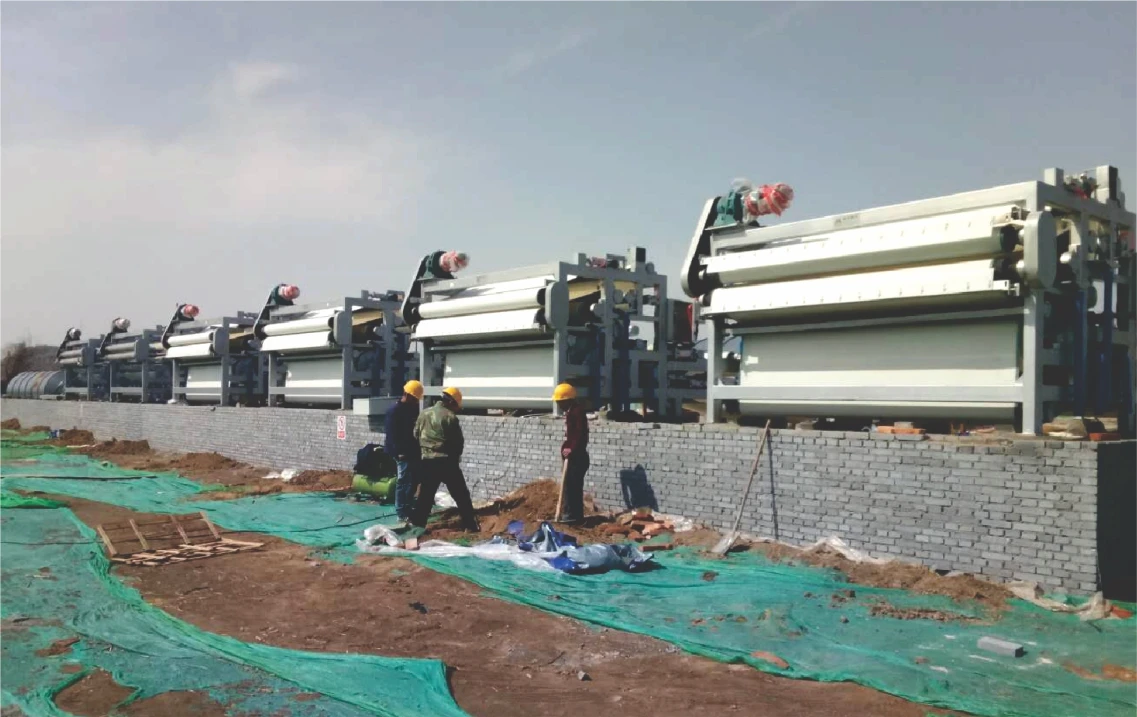
Tailings management has become one of the most critical engineering challenges in modern mining projects. As ore grades decline and production volumes increase, mining operations generate larger quantities of fine and ultra-fine tailings that are difficult to handle using conventional methods. For EPCM contractors, designing a reliable, cost-effective, and scalable tailings dewatering system is no longer optional—it is a core requirement of project feasibility and long-term sustainability.
In this context, high-capacity belt filter press systems are increasingly being integrated into tailings dewatering flowsheets, especially in large-scale mining projects across Africa, South America, and Central Asia. Their ability to deliver continuous operation, high throughput, and relatively low operating cost makes them a strong alternative or complement to traditional thickening and filtration technologies.
The Role of EPCM in Tailings Dewatering Design
EPCM contractors such as DRA Global, SENET, and Lycopodium are responsible for defining the entire process flowsheet of mining plants—from ore preparation to final tailings disposal.
Within this scope, tailings dewatering design is a key decision area that directly affects:
- Tailings storage facility (TSF) sizing
- Water recovery efficiency
- Reagent consumption
- Pumping and pipeline costs
- Environmental compliance
- Long-term closure liability
As a result, EPCM engineers are increasingly evaluating alternative tailings handling strategies that reduce reliance on wet tailings storage facilities. This is where high-capacity belt filter press technology becomes particularly relevant.
Why Belt Filter Press Systems Are Gaining Attention
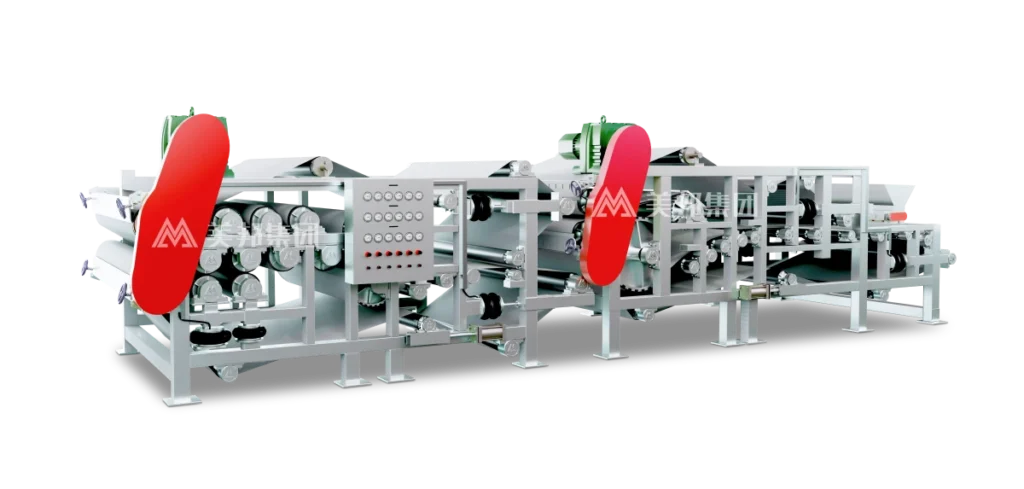
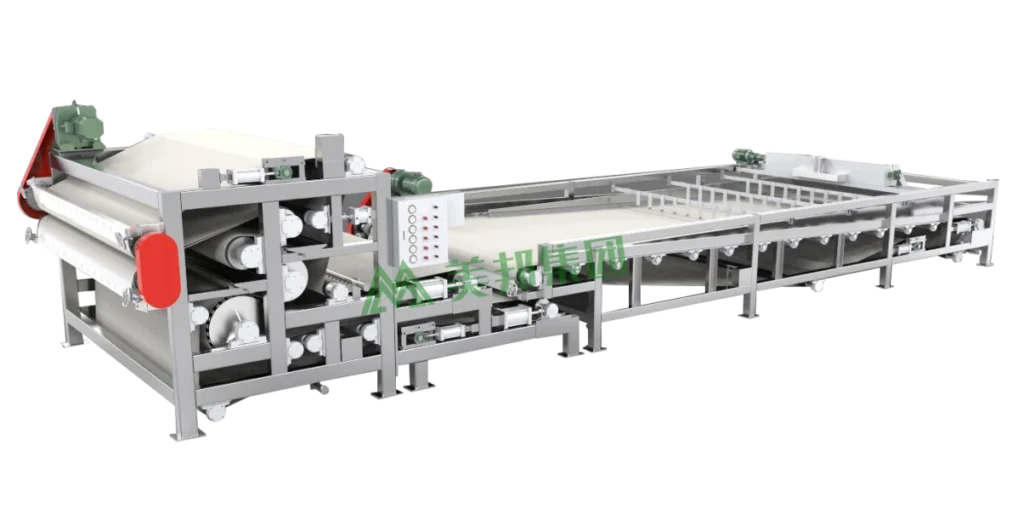
A belt filter press is a continuous mechanical dewatering system that uses gravity drainage and progressive pressure applied through rollers to remove water from slurry. In tailings applications, modern high-capacity belt filter presses are capable of handling large volumetric flows while producing relatively dry filter cake.
Compared with conventional technologies such as thickener-only circuits or batch filter presses, belt filter press systems offer several engineering advantages:
1. Continuous operation
Unlike plate-and-frame filter presses, belt systems operate continuously, making them suitable for large tonnage mining operations where downtime must be minimized.
2. High throughput capability
Modern large-scale belt filter press systems can process tens of tons per hour per unit, making them suitable for medium to large mining plants and modular expansions.
3. Lower energy consumption
Compared to centrifuges, belt presses typically consume less energy per ton of dry solids produced, which is increasingly important in remote mining regions with high power costs.
4. Operational simplicity
EPCM designers often prefer equipment that can be integrated with minimal operator intervention. Belt filter presses are relatively straightforward to operate and maintain.
5. Water recovery efficiency
Recovered process water can be recycled back into the plant, reducing freshwater demand—an increasingly critical KPI in arid mining regions.
Integration into EPCM Tailings Flowsheets
In modern EPCM-designed plants, belt filter press systems are rarely used in isolation. Instead, they are typically integrated into multi-stage tailings dewatering circuits.
A common flowsheet includes:
- Primary thickening stage
High-rate or high-density thickeners reduce slurry volume and increase solids concentration. - Conditioning stage
Flocculants are added to improve solid-liquid separation efficiency. - Belt filter press dewatering stage
The thickened underflow is fed into a high-capacity belt filter press system for final dewatering. - Dry cake handling
Filter cake is transported via conveyors to dry stacking or further disposal systems.
This hybrid approach allows EPCM engineers to balance capital cost, water recovery performance, and tailings storage requirements.
Engineering Considerations in Equipment Selection
For EPCM contractors, selecting a belt filter press system is not simply a matter of capacity. Several technical factors must be evaluated during feasibility and detailed design stages:
- Particle size distribution of tailings
- Clay content and rheology
- Required cake dryness (moisture content)
- Throughput variability
- Plant availability requirements
- Flocculant optimization
- Space constraints within the processing plant
In many African mining projects, particularly gold and copper operations, tailings characteristics vary significantly over the life of mine. Therefore, flexibility and scalability are critical design requirements.
High-Capacity Belt Filter Press as a Scalable Solution
For large mining operations, modular high-capacity belt filter press systems offer a practical way to scale tailings dewatering capacity without redesigning the entire plant. Multiple units can be installed in parallel, allowing EPCM designers to:
- Increase capacity incrementally
- Reduce risk during ramp-up
- Maintain redundancy for maintenance shutdowns
- Optimize CAPEX phasing across project stages
This modular approach is particularly attractive for EPCM contractors managing greenfield projects in emerging mining regions.
Cost and Sustainability Drivers
One of the main reasons EPCM companies are increasingly considering belt filter press technology is the combined pressure of cost and environmental compliance.
Tailings storage facilities are becoming more expensive due to:
- Stricter environmental regulations
- Increased dam safety requirements
- Land acquisition constraints
- Long-term closure liabilities
By reducing the volume of wet tailings, high-capacity belt filter press systems can significantly reduce TSF footprint and associated capital costs. In some cases, they also enable dry stacking strategies, which are becoming more common in modern mining projects.
Industrial Application Outlook
In practice, belt filter press systems are already widely used in:
- Gold tailings retreatment projects
- Coal fine tailings dewatering
- Base metal concentrators
- Industrial mineral processing plants
Companies such as Anglo American and Sibanye-Stillwater have increasingly explored advanced tailings dewatering strategies as part of their ESG commitments and water management strategies.
As EPCM firms continue to evolve their design standards, belt filter press technology is expected to play a larger role in hybrid tailings management systems, particularly in regions where water scarcity and environmental pressure are high.
Conclusion
High-capacity belt filter press systems are becoming an important component of modern tailings dewatering strategies in EPCM mining projects. Their ability to combine continuous operation, scalable capacity, and relatively low operating cost makes them a strong candidate for inclusion in both greenfield and brownfield developments.
For EPCM contractors, the key advantage lies in system flexibility. When integrated into a well-designed flowsheet with thickening and conditioning stages, belt filter press systems can significantly improve water recovery, reduce TSF dependency, and support more sustainable mining operations.
As global mining continues to shift toward higher efficiency and lower environmental impact, high-capacity belt filter press technology is likely to remain a core consideration in tailings dewatering design for years to come.