
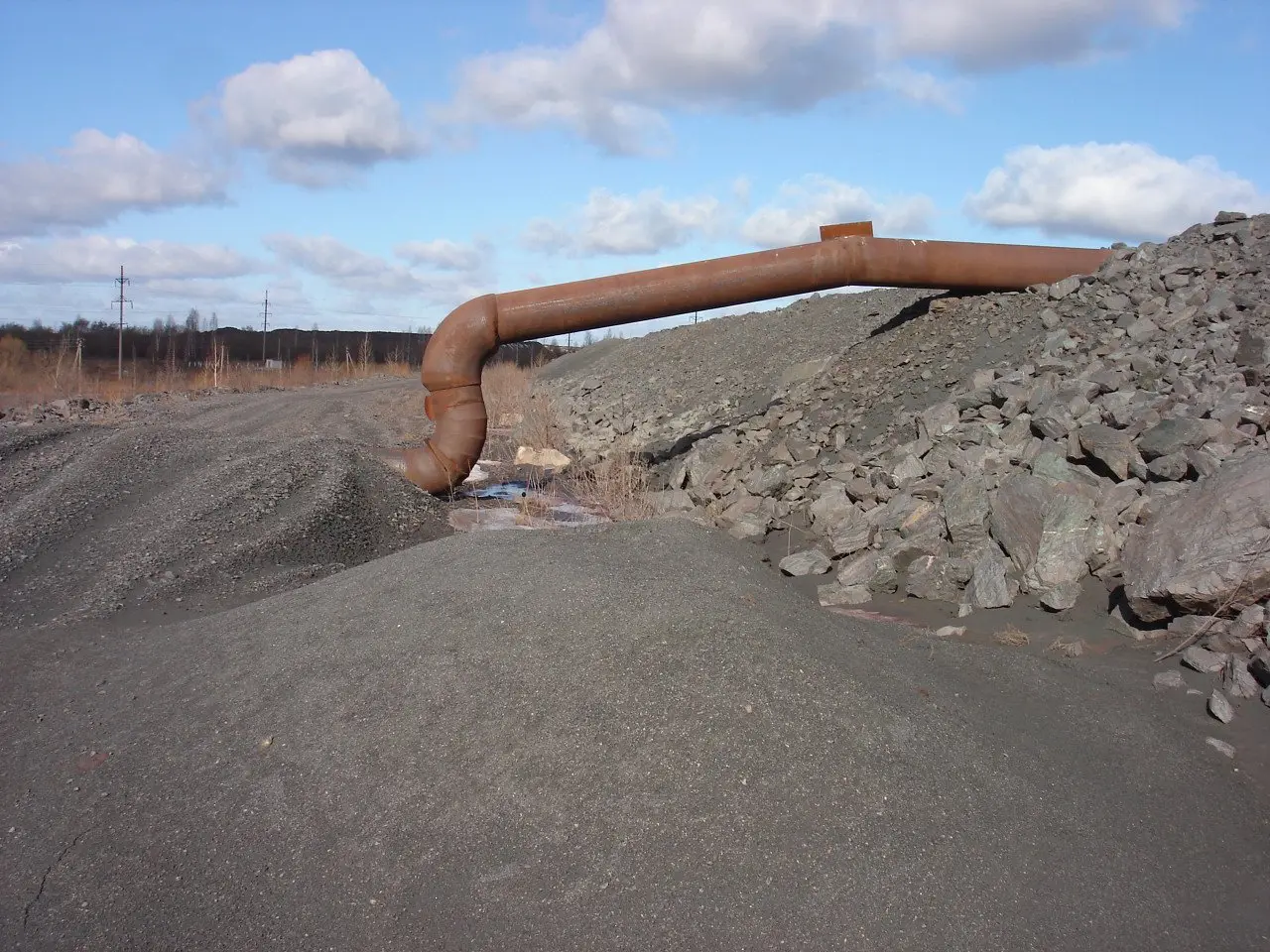
Across Africa, mining companies are facing growing pressure to improve tailings management while controlling operating costs. Whether in copper mines in Zambia, gold mines in Tanzania, or emerging lithium projects across Southern Africa, tailings disposal has become a critical part of mine planning.
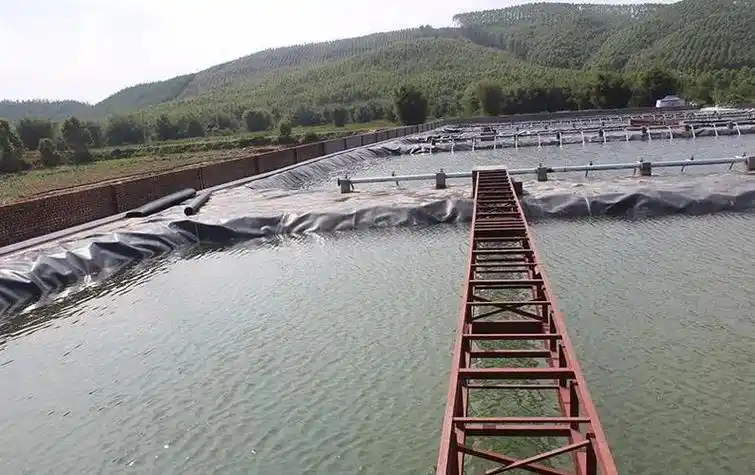
Traditionally, many mines relied on conventional tailings storage facilities (TSFs) as the primary disposal method. While this approach remains common, rising construction costs, stricter environmental requirements, and increasing water scarcity are forcing operators to look for more efficient alternatives.
As a result, more mining companies are evaluating multi-stage tailings dewatering systems that maximize water recovery while reducing the volume of material sent to tailings storage facilities. One practical approach combines a thickener, a high-capacity belt filter press, and a final-stage filtration system. This strategy can significantly reduce tailings management costs while supporting long-term mine sustainability.
The Growing Cost of Tailings Storage
For many African mines, expanding a TSF is becoming increasingly expensive.
A new tailings dam or TSF expansion project often requires:
- Significant earthworks
- Environmental assessments
- Water management infrastructure
- Long-term monitoring
- Additional land acquisition
These costs continue long after construction is completed.
At the same time, water has become a valuable operational resource. In regions where water availability is limited, every cubic meter recovered from the tailings stream can reduce fresh water demand and lower overall operating costs.
This is why tailings dewatering is no longer viewed solely as a waste management process. It is increasingly regarded as an important component of mine economics.
Why Multi-Stage Tailings Dewatering Makes Sense
Many mines attempting dry stack tailings or partial dewatering often encounter a common challenge.
High-pressure filtration systems can achieve low moisture content, but they also require significant capital investment and operating costs when handling large tailings volumes.
For large copper, gold, and lithium operations, processing the entire tailings stream through pressure filtration alone may not always be the most economical solution.
A multi-stage approach allows each piece of equipment to perform the task it handles most efficiently.
Stage 1: Tailings Thickening
The first step is tailings thickening.
A thickener increases solids concentration before filtration, reducing the volume of slurry that must be processed downstream.
Benefits include:
- Reduced pumping requirements
- Lower filtration load
- Improved water recovery
- Smaller downstream equipment requirements
By removing a large portion of free water at this stage, mines can immediately improve process efficiency.
Stage 2: High-Capacity Belt Filter Press Dewatering
After thickening, the tailings slurry enters the most important stage of the system: large-scale mechanical dewatering.
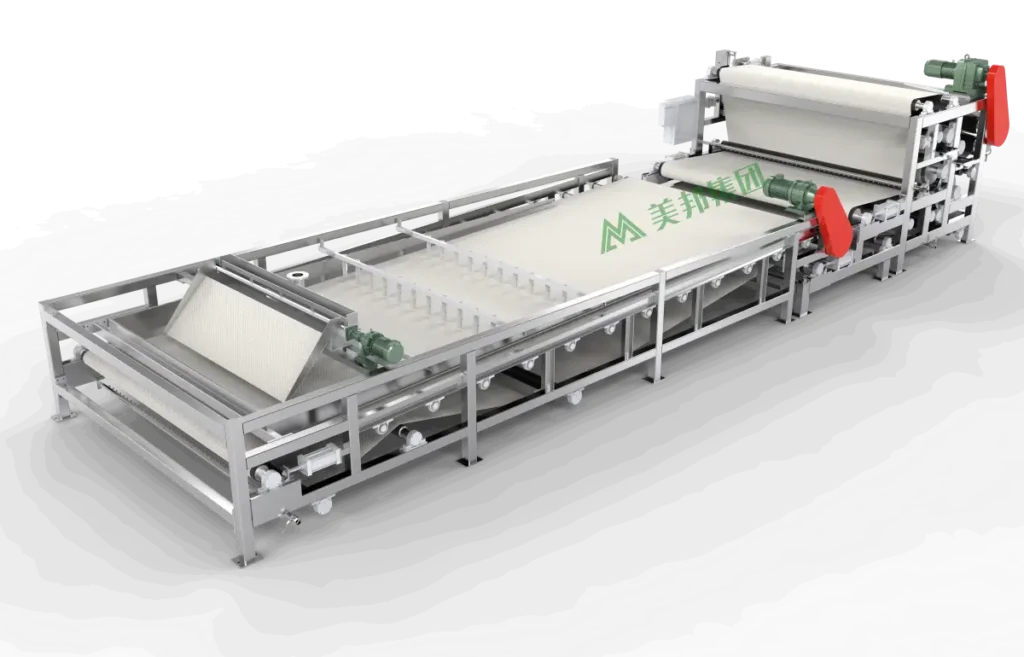
This is where an ultra-large dual-motor belt filter press can provide significant advantages.
Unlike many traditional filtration systems that focus on achieving the lowest possible moisture content, the belt filter press is designed to handle very large volumes continuously and economically.
For many African mining operations, throughput is often more important than chasing the last few percentage points of moisture reduction.
A properly designed belt filter press can:
- Process large tailings volumes continuously
- Reduce water content substantially before final filtration
- Lower energy consumption
- Reduce downstream equipment requirements
- Minimize operating costs
This intermediate dewatering stage can dramatically reduce the workload of the final filtration equipment.
Why Large Capacity Matters
Many mining projects underestimate the impact of filtration bottlenecks.
As production increases, filtration capacity often becomes one of the limiting factors in tailings management.
Installing multiple small dewatering units creates challenges such as:
- Higher maintenance costs
- More operators
- Larger equipment footprints
- Increased spare parts inventory
An ultra-large dual-motor belt filter press addresses these issues by providing high throughput from a single machine.
For large-scale copper and gold operations, this approach can simplify plant design while reducing total ownership costs.
The dual-motor design offers additional advantages.
By distributing power more effectively across the filtration process, the system maintains stable operation under varying feed conditions while reducing mechanical stress on key components.
This is particularly important in mining environments where reliability directly affects production continuity.
Stage 3: Final Filtration for Enhanced Dryness
After primary dewatering by the belt filter press, a smaller volume of concentrated tailings can be sent to a final-stage filtration system.
At this point, the filtration load is significantly lower than processing the entire tailings stream directly.
The benefits are substantial:
- Smaller final filtration equipment
- Lower capital expenditure
- Reduced power consumption
- Lower maintenance requirements
- Improved overall system economics
Instead of forcing expensive filtration equipment to process 100% of the tailings slurry, the system only handles a concentrated fraction of the original flow.
This creates a more balanced and cost-effective tailings dewatering process.
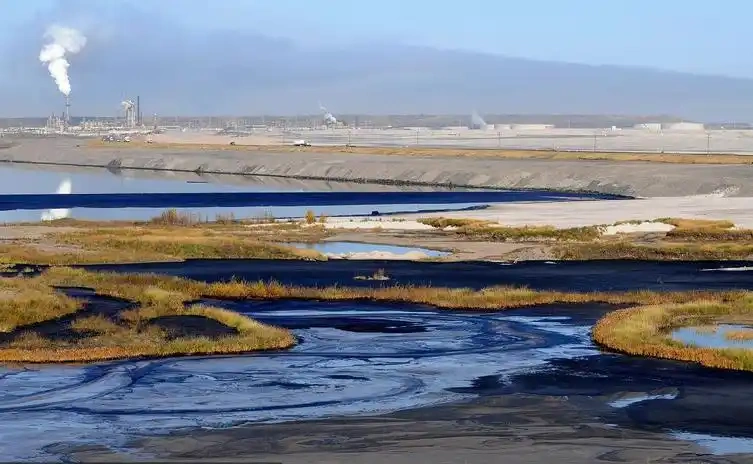
Supporting Dry Stack Tailings Development
Many African mines are exploring dry stack tailings as part of their long-term environmental strategy.
Successful dry stack tailings projects depend on two key factors:
- Achieving sufficient dewatering performance
- Maintaining reasonable operating costs
A multi-stage dewatering system helps achieve both objectives.
The thickener removes free water efficiently.
The belt filter press performs high-volume mechanical dewatering.
The final filtration stage provides additional moisture reduction where required.
Together, these technologies create a practical pathway toward dry stack tailings implementation without excessive filtration costs.
Water Recovery Benefits
Water recovery remains one of the strongest drivers behind tailings dewatering investments.
Recovered process water can be returned to:
- Grinding circuits
- Flotation systems
- Process water tanks
This reduces dependence on external water sources and improves overall site sustainability.
In regions where water access is becoming increasingly constrained, higher water recovery rates can provide both environmental and economic benefits.
A Practical Solution for African Mining Projects
Every mine is different. Ore characteristics, climate conditions, tailings properties, and water availability all influence the optimal dewatering strategy.
However, one trend is becoming increasingly clear.
Many large mining operations are moving away from single-equipment solutions and adopting integrated tailings dewatering systems designed to balance capital costs, operating costs, and water recovery objectives.
Within these systems, the ultra-large dual-motor belt filter press plays a critical role.
By handling large volumes efficiently and economically, it bridges the gap between thickening and final filtration, reducing overall system costs while maintaining high throughput.
For mines seeking to reduce TSF expansion costs, improve water recovery, and support future dry stack tailings initiatives, a multi-stage tailings dewatering strategy may offer the most practical and cost-effective path forward.