
As environmental regulations become increasingly stringent and tailings storage facilities face growing scrutiny, mining companies are under pressure to adopt more efficient and sustainable tailings management solutions. Among the available mechanical dewatering technologies, the belt filter press and the centrifuge are two widely discussed options.
While both technologies aim to reduce tailings moisture and lower disposal costs, their operating principles, energy requirements, maintenance needs, and overall economics differ significantly. For mine operators evaluating a new tailings dewatering system, understanding the true lifecycle cost is far more important than simply comparing equipment prices.
This article provides a technical comparison of belt filter press and centrifuge systems, focusing on capital investment, operating expenses, maintenance costs, energy consumption, and long-term return on investment.
Understanding the Two Technologies
Belt Filter Press
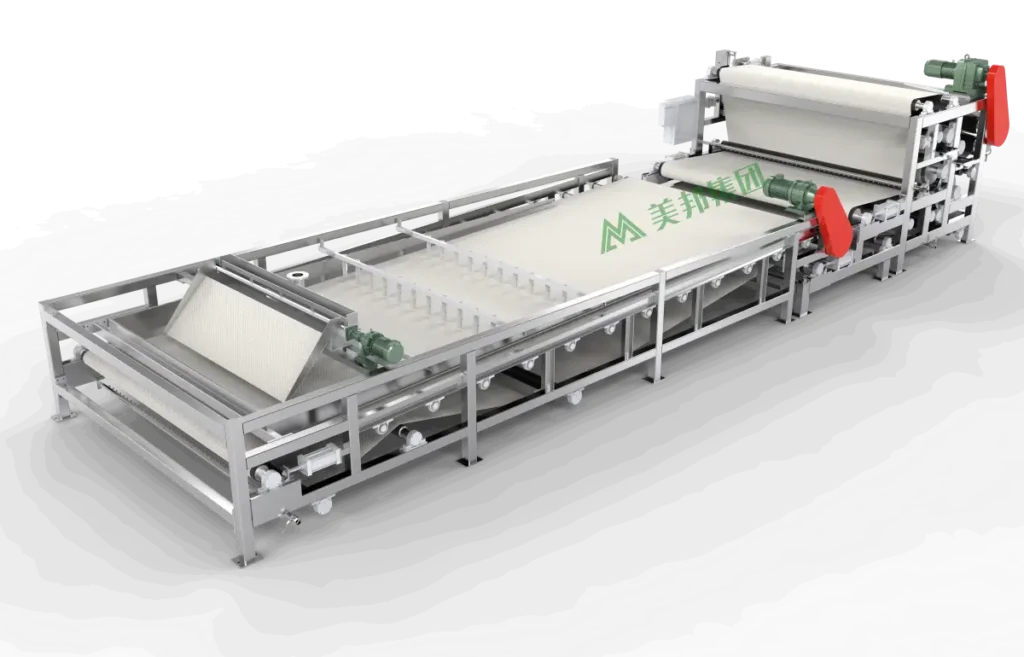
A belt filter press removes water from tailings slurry through a combination of gravity drainage and mechanical compression. Conditioned slurry is distributed onto a moving filter belt, where free water is drained before the material passes through multiple pressure zones.
Modern heavy-duty mining belt filter presses are capable of continuous operation with high throughput and relatively low energy consumption. They are commonly used for:
- Copper tailings
- Iron ore tailings
- Gold mine tailings
- Coal preparation plant sludge
- Industrial mineral processing residues
Large-format mining units can process substantial slurry volumes while maintaining stable operation for 24-hour production schedules.
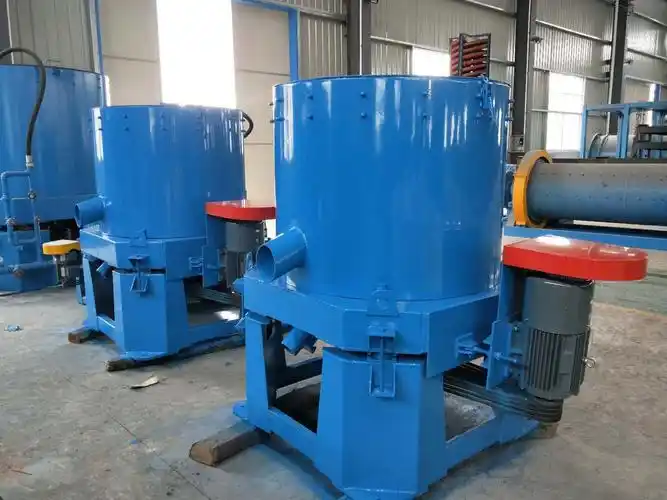
Centrifuge
A centrifuge separates solids and liquids by generating high centrifugal force through a rapidly rotating bowl. The difference in density between solids and water enables separation.
Centrifuges are widely used in:
- Fine particle separation
- Municipal sludge treatment
- Chemical processing
- Certain mining applications with very fine particles
Because separation relies on rotational speed, centrifuges require significantly higher power input than mechanical belt dewatering systems.
Initial Equipment Investment
One common misconception is that centrifuges always occupy less space and therefore reduce project costs.
In reality, equipment procurement cost depends heavily on processing capacity.
For large-scale mining operations handling hundreds of tons of tailings slurry per hour, multiple centrifuges are often required to achieve the same throughput as a smaller number of large belt filter presses.
When comparing equivalent treatment capacity:
| Cost Factor | Belt Filter Press | Centrifuge |
|---|---|---|
| Equipment Purchase | Moderate | High |
| Installed Power | Lower | Higher |
| Structural Requirements | Moderate | High |
| Foundation Requirements | Standard | Enhanced vibration control |
| Expansion Cost | Relatively low | Relatively high |
The high rotational speed of centrifuges also requires more sophisticated balancing systems, vibration monitoring, and mechanical protection components, which increase overall project investment.

Energy Consumption Comparison
Energy consumption is often the largest long-term cost factor in tailings dewatering operations.
A belt filter press primarily drives:
- Filter belts
- Rollers
- Hydraulic systems
- Washing pumps
The actual dewatering force is generated mechanically through progressive compression, making energy demand relatively low.
By contrast, centrifuges generate thousands of times the force of gravity through high-speed rotation. Maintaining these rotational speeds continuously requires substantial electrical power.
In many mining projects, centrifuge power consumption can be several times higher than that of an equivalent-capacity belt filter press.
For operations running 24 hours per day and 365 days per year, even a modest difference in power demand can translate into hundreds of thousands of dollars in annual electricity costs.
As energy prices continue to rise globally, power efficiency is becoming a decisive factor in tailings treatment technology selection.
Maintenance and Wear Costs
Mining tailings are highly abrasive.
Materials such as quartz, iron ore particles, and silica-rich residues can accelerate equipment wear.
Belt Filter Press Maintenance
Typical wear parts include:
- Filter belts
- Bearings
- Roller coatings
- Scrapers
These components are relatively accessible and can often be replaced without extensive downtime.
Maintenance procedures are straightforward, and spare parts are generally available at reasonable cost.
Centrifuge Maintenance
Centrifuges operate under high rotational speeds and experience substantial mechanical stress.
Common wear components include:
- Scroll conveyors
- Wear liners
- Bearings
- Drive assemblies
- Rotating seals
Repair procedures often require specialized technicians and precision balancing.
In abrasive tailings applications, wear rates can increase significantly, leading to higher maintenance expenditures over the equipment’s lifecycle.
For many mines, annual maintenance expenses become a major consideration after the initial purchase decision.
Dewatering Performance
Cost is important, but final moisture content ultimately determines whether a technology can meet operational requirements.
Centrifuge Advantages
Centrifuges perform particularly well when handling:
- Ultrafine particles
- Low-density slurries
- Certain clay-rich materials
Their compact design can also be advantageous where installation space is extremely limited.
Belt Filter Press Advantages
Modern mining belt filter presses offer:
- High throughput
- Continuous operation
- Stable cake discharge
- Lower operating costs
For many coarse and medium-sized mineral tailings, belt presses can achieve moisture levels suitable for transportation, stacking, or further treatment.
The optimal solution depends heavily on particle size distribution, mineral characteristics, and target moisture requirements.
Cost per Ton of Tailings Treated
When evaluating economics, the most useful metric is not equipment price but cost per ton of tailings treated.
This metric includes:
- Capital depreciation
- Electricity consumption
- Labor
- Maintenance
- Consumables
- Downtime losses
In many large-scale mining projects, belt filter presses achieve a lower total cost per ton because:
- Energy demand is lower.
- Maintenance is simpler.
- Spare parts are less expensive.
- Large-capacity units reduce equipment quantity.
- Continuous operation improves overall efficiency.
As treatment volume increases, these advantages become more pronounced.
This is one reason why many large mines continue to favor mechanical pressure-based dewatering systems for high-capacity tailings management.
Environmental and Sustainability Considerations
Sustainable mining practices increasingly influence technology selection.
Lower energy consumption directly reduces carbon emissions associated with electricity generation.
In addition, efficient dewatering can:
- Reduce water losses
- Increase water recycling rates
- Decrease tailings storage requirements
- Improve overall environmental compliance
Because belt filter presses generally consume less power, they often contribute to lower operating emissions over the life of the project.
For mining companies pursuing ESG objectives, this benefit can be significant.
Which Technology Delivers Better Value?
There is no universal answer.
Centrifuges remain a valuable solution for specialized applications involving extremely fine particles or limited installation space.
However, for many large mining operations focused on tailings dewatering, tailings dry stacking, and long-term cost control, belt filter presses often provide a more economical balance of performance and operating expense.
When evaluating a tailings treatment system, mine operators should compare:
- Capital investment
- Energy consumption
- Maintenance costs
- Water recovery rate
- Throughput requirements
- Final cake moisture
- Lifecycle cost per ton
The most cost-effective solution is rarely the one with the lowest purchase price. Instead, it is the technology that minimizes total ownership cost while meeting production and environmental objectives throughout the life of the mine.
Conclusion
The comparison between a belt filter press and a centrifuge extends far beyond equipment procurement costs. While centrifuges can offer advantages in certain specialized applications, their higher power consumption and maintenance requirements often increase long-term operating expenses.
For large-scale mining operations seeking reliable, continuous, and cost-effective tailings management, modern belt filter press technology frequently delivers lower lifecycle costs and superior economic performance. As mines continue to prioritize water recovery, dry stacking, and ESG compliance, understanding the full cost structure of each technology is essential for making informed investment decisions.