
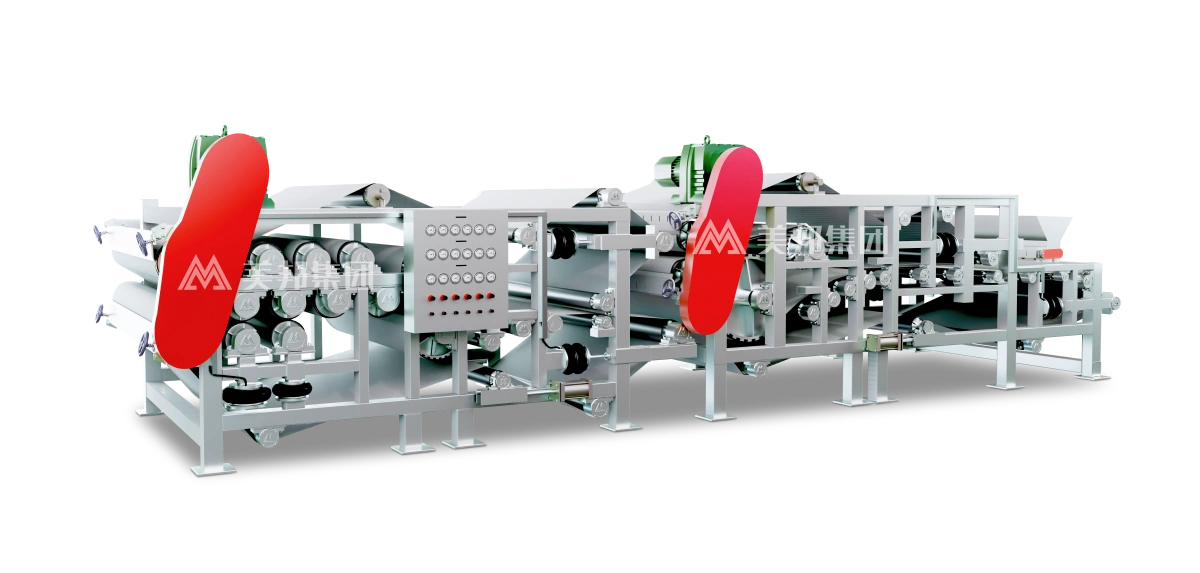
With increasingly strict environmental regulations and rising operating costs in the global mining industry, tailings dry stacking has become an essential solution for modern mine wastewater treatment and sustainable mining operations. Choosing the right mining filter press directly affects processing capacity, operating costs, water recovery efficiency, and long-term project profitability.
Traditionally, many mining companies have used plate and frame filter presses for tailings dewatering. While this technology can achieve relatively low moisture content, it also presents several major disadvantages, especially for large-scale mining operations requiring continuous processing capacity.
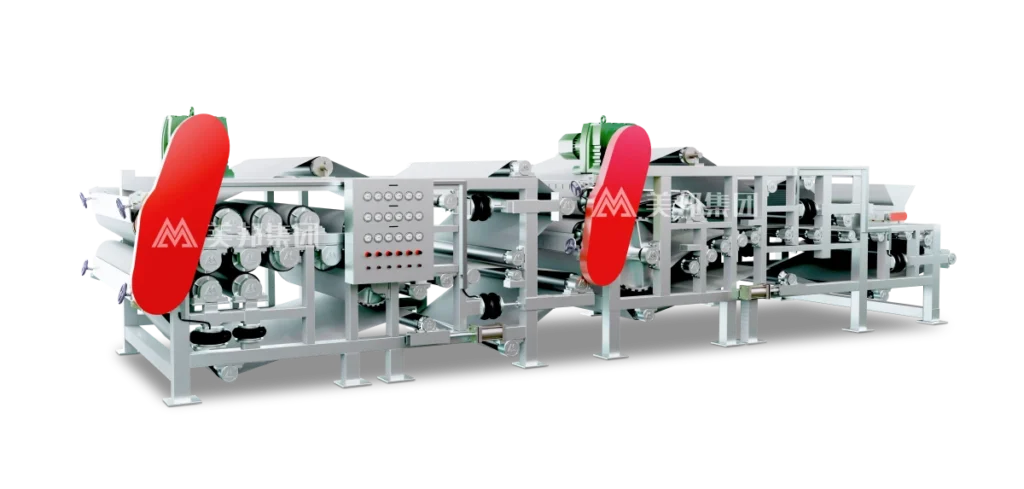
In recent years, large mining belt filter presses have become an increasingly popular alternative in the tailings dry stacking market. Designed specifically for high-capacity mining applications, the new generation of dual-motor high-efficiency filter presses combines continuous operation, low energy consumption, and lower operating costs with dewatering performance approaching that of traditional plate and frame filter presses.
This article compares the working principles, processing capacity, moisture content, energy consumption, operation, and maintenance of these two mining dewatering technologies to help mining companies select the most suitable tailings dry stacking solution.
What Is Tailings Dry Stacking?
Tailings dry stacking refers to the process of removing water from mining tailings slurry to produce low-moisture filter cake suitable for transportation and dry storage. Compared with conventional wet tailings ponds, dry stacking significantly reduces environmental risks, improves water recycling efficiency, and minimizes land occupation.
Modern mining companies increasingly prefer tailings dry stacking systems because they offer:
- Improved environmental safety
- Reduced tailings pond risks
- Higher water recovery rates
- Lower long-term operating costs
- Better compliance with environmental regulations
- Safer mine operation management
As global environmental standards continue to tighten, mining filter press systems are becoming critical equipment in mineral processing plants worldwide.
Traditional Solution: Plate and Frame Filter Press
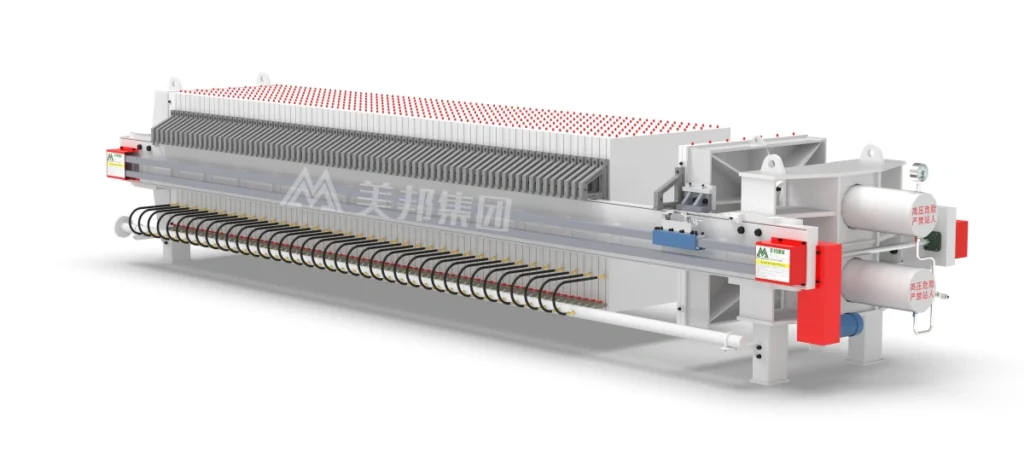
The plate and frame filter press has been widely used in mining tailings dewatering for decades. Its working principle is based on chamber filtration. Slurry is pumped into filter chambers formed by filter plates, and pressure is applied to separate solids from liquid.
The equipment operates in batches rather than continuously. Each filtration cycle includes feeding, pressure filtration, cake formation, plate opening, cake discharge, and cloth cleaning. After one cycle finishes, the next cycle begins.
Advantages of Plate and Frame Filter Press
- Low final moisture content
- Suitable for fine particle tailings
- Relatively stable filtration accuracy
- Mature technology widely used in mining industry
Because of the strong mechanical squeezing force inside the chambers, plate and frame filter presses can produce relatively dry filter cakes, making them suitable for some high-dryness mining applications.
However, despite these advantages, the technology also has several limitations for large mining projects.
Limitations of Plate and Frame Filter Press
1. High Equipment Cost
Mining-grade plate and frame filter presses are expensive, especially large models designed for high-capacity operations. Initial investment costs are often very high for mining companies.
2. Low Processing Capacity
Because the equipment operates in cycles rather than continuously, its hourly processing capacity is relatively limited. Large mines often require multiple units to meet production demands.
3. High Energy Consumption
Plate and frame filter presses typically require high-pressure feeding systems and hydraulic systems, resulting in high power consumption during operation.
4. Complex Structure
The equipment includes hydraulic stations, filter plates, plate-shifting mechanisms, and automatic control systems, making the overall structure relatively complicated.
5. High Labor Requirements
Although many modern systems include automation features, plate and frame filter presses still require experienced operators for monitoring, maintenance, and troubleshooting.
6. Higher Maintenance Costs
Filter plates, hydraulic systems, seals, and cloth cleaning systems require regular maintenance and replacement, increasing long-term operating costs.
For many large mines processing massive slurry volumes daily, these disadvantages create significant operational pressure.
New Generation Solution: Dual-Motor High-Efficiency Belt Filter Press
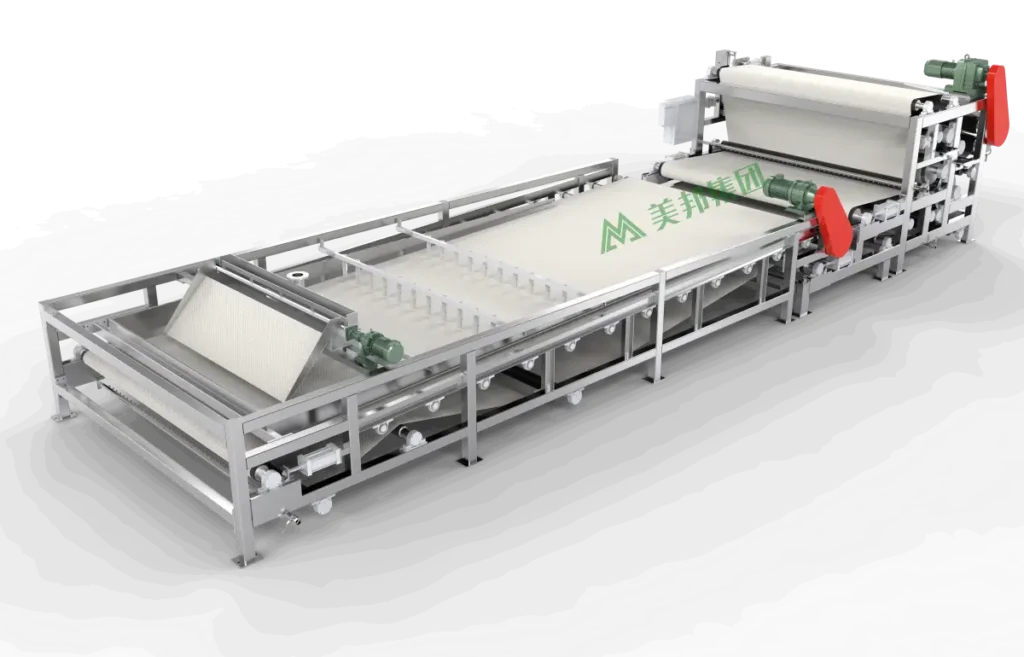
To meet the growing demand for high-capacity tailings dry stacking systems, our company developed a mining-specific ultra-large belt filter press specially designed for continuous mining dewatering applications.
Unlike conventional belt presses, this mining filter press adopts a dual-motor extra-long structure combined with a secondary pressing system. After secondary squeezing, the final filter cake moisture approaches the dryness level of a plate and frame filter press while maintaining the continuous operation advantages of belt filtration technology.
Working Principle of the Mining Belt Filter Press
The slurry first enters the gravity drainage zone where free water is removed naturally. It then passes through wedge zones and multiple pressing rollers for progressive compression and dewatering.
The dual-motor drive system ensures stable belt tension and balanced pressure distribution during operation. The extra-long pressing zone significantly increases dewatering time and improves final cake dryness.
Unlike plate and frame filter presses, the belt filter press operates continuously, allowing uninterrupted slurry feeding and cake discharge.
Key Advantages of the Dual-Motor High-Efficiency Filter Press
1. Extremely High Processing Capacity
Our mining belt filter press can process up to 80 tons of slurry per hour, making it highly suitable for large-scale mining tailings treatment projects.
Multiple machines can operate in parallel to satisfy even larger processing demands for copper mines, iron ore plants, lithium mines, gold mines, and other mineral processing facilities.
Continuous operation significantly improves overall plant efficiency compared with batch-operated plate and frame filter presses.
2. Lower Equipment Investment
The price of our mining belt filter press is only about 40% of a comparable plate and frame filter press system.
This dramatically reduces the initial investment burden for mining companies while still delivering excellent dewatering performance.
3. Lower Energy Consumption
The installed power consumption is approximately 50% lower than traditional plate and frame filter presses.
Lower power consumption directly reduces operating costs, especially for mines running 24-hour continuous operations.
4. Reduced Labor Costs
Thanks to its high automation level and continuous operation design, labor requirements are significantly reduced.
Only minimal operator intervention is required for daily operation, lowering labor costs by approximately 50% compared with conventional filter press systems.
5. Simpler Structure and Easier Maintenance
Compared with the complex hydraulic systems of plate and frame filter presses, the belt filter press structure is much simpler.
Maintenance is easier, downtime is lower, and spare parts replacement costs are reduced.
6. Stable Continuous Operation
One of the biggest advantages of the mining belt filter press is its ability to operate continuously for 24 hours.
For large mining projects requiring uninterrupted slurry treatment, continuous operation is far more practical than intermittent batch filtration systems.
Which Tailings Dry Stacking System Is Better?
Both plate and frame filter presses and mining belt filter presses have their own application scenarios.
If the project prioritizes extremely low moisture content and processing capacity is relatively small, a plate and frame filter press may still be suitable.
However, for modern large-scale mining operations requiring:
- High processing capacity
- Continuous operation
- Lower investment cost
- Lower energy consumption
- Reduced labor requirements
- Easier maintenance
- Higher operational efficiency
the dual-motor high-efficiency belt filter press provides a far more economical and practical tailings dry stacking solution.
As environmental regulations continue tightening worldwide, mining companies are increasingly seeking efficient, energy-saving, and cost-effective mining dewatering systems.
Our ultra-large mining belt filter press combines the advantages of continuous operation with dewatering performance approaching that of traditional plate and frame filter presses, making it an ideal choice for modern tailings dry stacking projects.
Conclusion
Selecting the right mining filter press is one of the most important decisions in a tailings dry stacking project. Equipment performance directly affects environmental compliance, operational efficiency, water recovery, and long-term profitability.
Compared with traditional plate and frame filter presses, our dual-motor high-efficiency filter press offers higher throughput, lower energy consumption, lower investment cost, reduced labor requirements, and stable continuous operation for large-scale mining applications.
As a professional tailings dry stacking solution provider, we are committed to helping mining companies achieve safer, greener, and more cost-effective tailings management through advanced mining dewatering technology.