
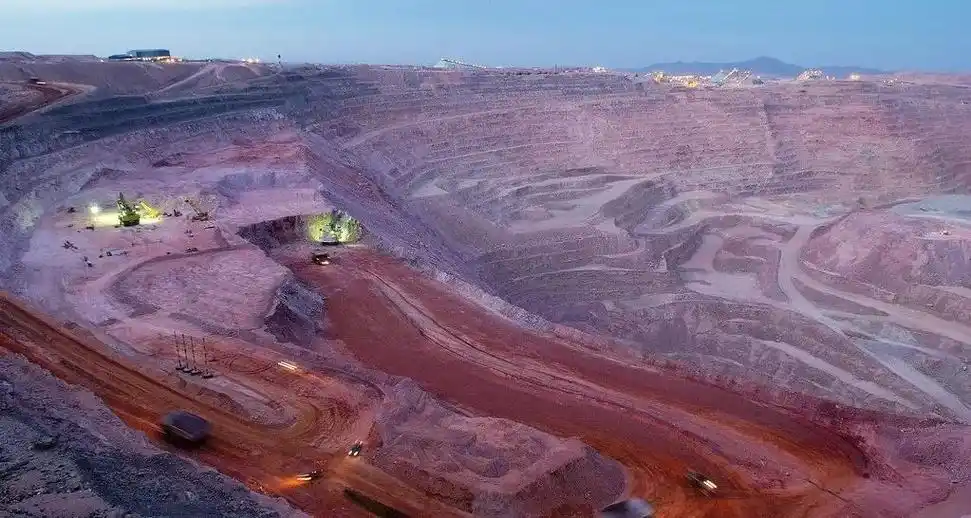
Northern Chile is home to some of the world’s largest copper mines. As global demand for copper continues to grow, many operations in the Atacama Desert are increasing production. While higher output brings greater revenue opportunities, it also creates a growing challenge: managing increasing volumes of tailings.
For many mines, expanding an existing Tailings Storage Facility (TSF) is becoming one of the most expensive parts of future production planning. Building a new TSF or raising an existing dam requires significant capital investment, lengthy environmental approvals, complex engineering, and ongoing monitoring throughout the facility’s life.
Instead of continuously investing in larger tailings storage facilities, more mining companies are evaluating tailings dewatering technologies that reduce the amount of water entering the TSF. Among these solutions, the high-capacity belt filter press is emerging as an attractive option for large copper operations seeking lower lifecycle costs.
Why TSF Expansion Is Becoming Increasingly Expensive in Northern Chile
Unlike many mining regions, northern Chile presents several unique challenges.
The region has one of the driest climates on Earth. Water resources are extremely limited, making every cubic meter of recovered water valuable. At the same time, environmental regulations continue to tighten, requiring mining companies to demonstrate safer and more sustainable tailings management practices.
Expanding a TSF today involves much more than constructing a larger dam. Costs typically include:
- New embankment construction
- Geotechnical investigations
- Environmental impact assessments
- Water management systems
- Long-term monitoring
- Closure and rehabilitation planning
- Additional land acquisition
For many existing copper mines, these costs can easily reach hundreds of millions of dollars over the life of the project.
As production increases, every additional ton of tailings occupies valuable storage space. This makes improving tailings dewatering efficiency one of the most effective ways to extend TSF service life.
The Hidden Cost of Wet Tailings
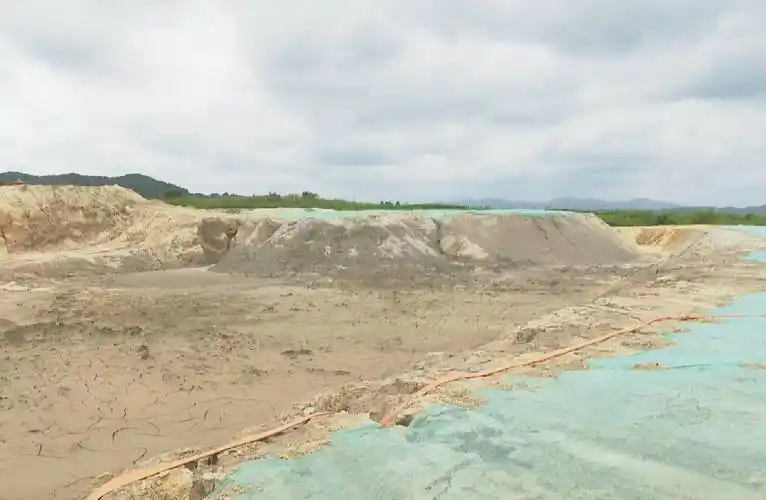
Many mines still transport tailings containing relatively high moisture content into conventional storage facilities.
Although pumping slurry is operationally simple, excess water significantly increases storage volume. Water trapped within the tailings occupies space that could otherwise accommodate additional solids.
Over years of operation, this extra water accelerates the filling of the TSF, forcing operators to consider costly expansions much earlier than originally planned.
Wet tailings also require:
- Larger containment structures
- More water recovery infrastructure
- Higher seepage management costs
- Increased dam maintenance
- Longer consolidation periods
These indirect costs often exceed the purchase price of dewatering equipment over the life of a mine.
Why More Copper Mines Are Investing in Tailings Dewatering
Rather than viewing dewatering equipment as an operating expense, many mining companies now treat it as an investment in infrastructure optimization.
A modern tailings dewatering system can significantly reduce the volume of water entering the TSF while recovering process water for reuse.
Benefits include:
- Lower TSF expansion costs
- Higher water recovery rates
- Reduced environmental risk
- Smaller tailings footprint
- Improved operational flexibility
- Easier progressive rehabilitation
For mines operating in water-stressed regions such as northern Chile, water recovery alone can generate substantial long-term value.
High-Capacity Belt Filter Press for Large Copper Mines
Traditional belt filter presses have often been associated with municipal sludge treatment or relatively small industrial applications.
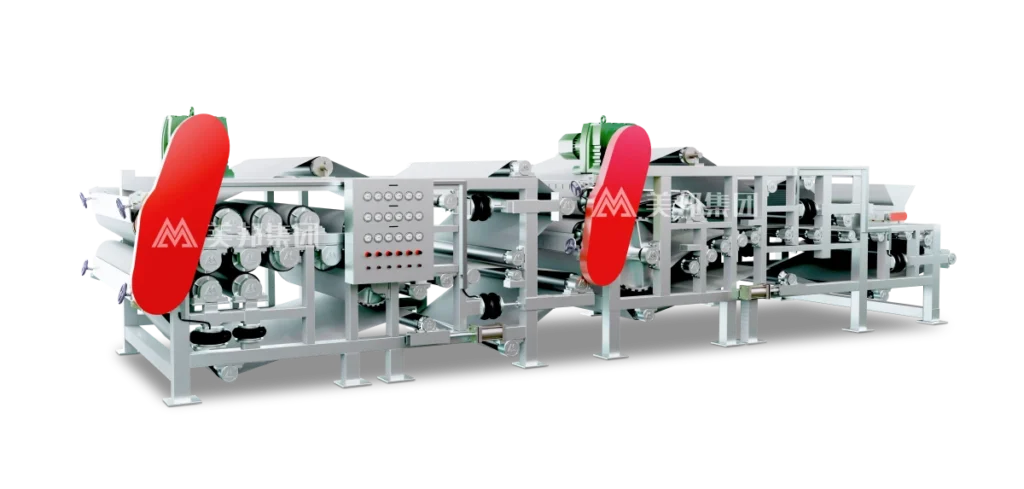
However, recent engineering developments have enabled a new generation of high-capacity belt filter press systems specifically designed for large-scale mining operations.
These machines feature:
- Extra-wide filtration belts
- Extended gravity drainage zones
- Multi-stage wedge dewatering
- Long pressure zones
- High-strength rollers
- Heavy-duty drive systems
- Continuous automatic operation
Instead of processing only a few tons per hour, modern mining belt filter presses can continuously handle large tailings flows suitable for medium and large copper concentrators.
Continuous operation is particularly attractive because copper concentrators typically run 24 hours a day.
Lower Capital Cost Compared with Large Filter Press Installations
Many copper mines automatically consider plate filter presses when planning filtered tailings systems.
While filter presses can produce relatively low cake moisture, they also require:
- Multiple filtration units
- Large hydraulic systems
- Batch operation
- High installed power
- Larger buildings
- More maintenance
- Higher labor requirements
For very large throughput applications, total capital investment increases rapidly.
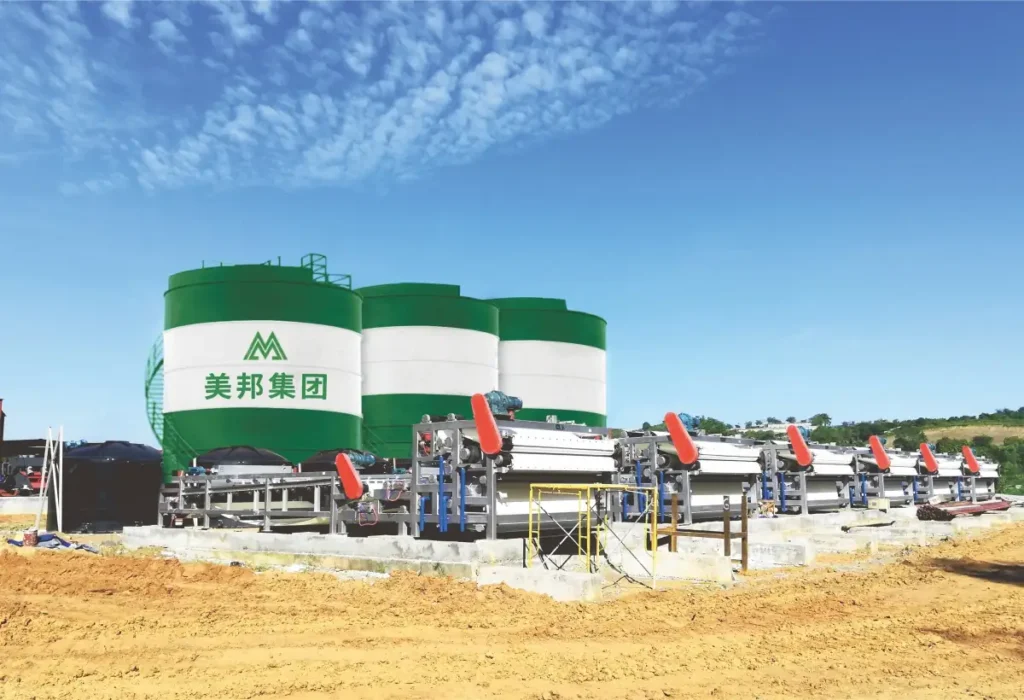
A high-capacity belt filter press provides an alternative approach by combining continuous operation with significantly lower equipment investment.
For mines processing tens of thousands of tons of tailings per day, reducing initial capital expenditure while maintaining reliable dewatering performance can greatly improve project economics.
Extending TSF Life Without Building a New Dam
One of the greatest financial advantages of tailings dewatering is extending the useful life of existing storage facilities.
Reducing moisture content means each cubic meter of storage can accommodate more solid material.
Even a modest reduction in water entering the TSF every day accumulates into enormous savings over years of continuous operation.
Instead of accelerating toward a costly dam expansion, operators gain additional years of available storage capacity.
For mines located in environmentally sensitive areas, delaying or eliminating a major TSF expansion can also simplify permitting and reduce project risk.
Supporting Water Recovery in the Atacama Desert
Water has become one of the most valuable resources for copper production in northern Chile.
Many operations already rely on seawater desalination, long-distance pipelines, or groundwater extraction.
Every percentage point of additional water recovery helps reduce dependence on expensive fresh water supplies.
A tailings dewatering system equipped with a high-capacity belt filter press returns more water to the process plant, reducing overall water consumption while supporting sustainable mining practices.
Recovered water can be reused in grinding, flotation, and concentrate transport, lowering both operating costs and environmental impact.
Choosing the Right Dewatering Technology
No single dewatering technology is suitable for every mining project.
Equipment selection depends on several factors:
- Tailings particle size
- Clay content
- Mineral composition
- Throughput requirements
- Target moisture content
- Water recovery goals
- Available installation space
- Overall project budget
For many medium and large copper mines, a high-capacity belt filter press offers an attractive balance between throughput, operating cost, maintenance, and investment.
Pilot testing and laboratory analysis remain essential before selecting any full-scale dewatering solution.
Looking Beyond Equipment Cost
When evaluating filtration systems, some procurement teams focus primarily on equipment price.
However, the true economic comparison should include the entire lifecycle of the tailings management system.
Questions worth considering include:
- How much can TSF expansion be delayed?
- How much additional water can be recovered?
- What is the reduction in long-term closure liabilities?
- How much land can be saved?
- What are the maintenance costs over the next twenty years?
- How will future environmental regulations affect operating costs?
In many cases, optimizing tailings dewatering generates financial benefits that continue throughout the life of the mine.
Conclusion
Northern Chile’s copper industry is entering a period where efficient tailings management is becoming just as important as mineral processing itself.
As TSF expansion costs continue to rise and water resources become increasingly scarce, mining companies are searching for practical solutions that improve both economics and sustainability.
A modern high-capacity belt filter press can play an important role in reducing the volume of water sent to tailings storage facilities, extending TSF life, improving water recovery, and lowering long-term infrastructure costs.
For copper mines planning future production growth, evaluating tailings dewatering technology today may be one of the most effective strategies for controlling tomorrow’s TSF expansion expenses while supporting safer and more sustainable mining operations.