
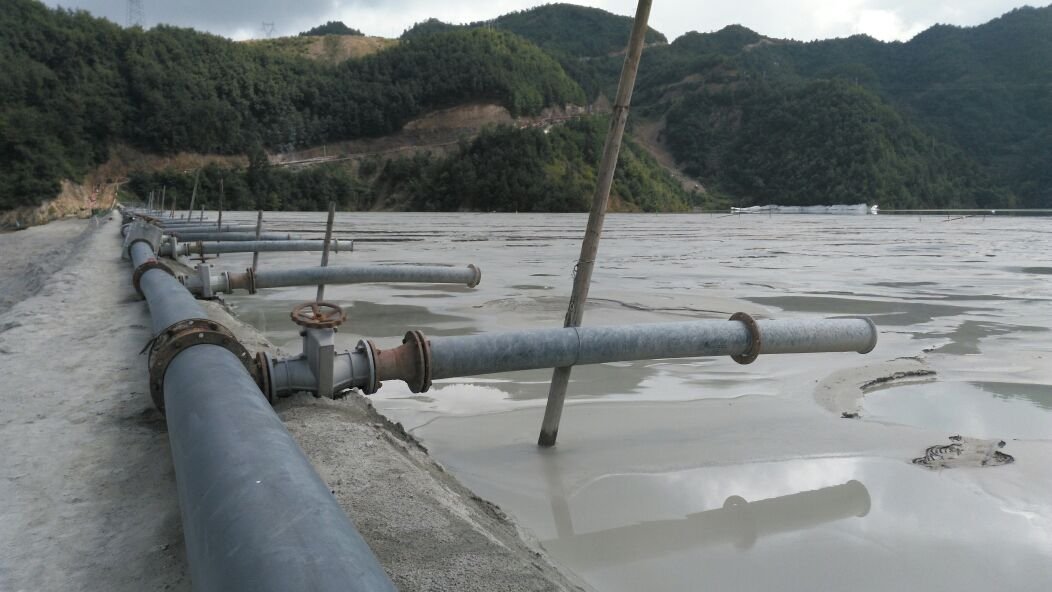
As kaolin producers face increasing pressure to reduce water consumption, improve tailings management, and meet environmental compliance requirements, mechanical dewatering has become a critical part of modern washing plant operations.
For decades, the plate and frame filter press has been the dominant technology for dewatering fine mineral slurries, including kaolin products and tailings. However, as washing plants continue to expand production capacity, many operators are re-evaluating whether traditional filter press systems remain the most economical solution for large-scale tailings treatment.
Today, the discussion is no longer simply about achieving the lowest possible moisture content. Mine operators are increasingly focused on throughput, operating costs, automation, water recovery, and long-term sustainability.
This has led many engineers to compare two technologies:
- Belt Filter Press
- Plate and Frame Filter Press
So which solution is better for kaolin washing tailings?
The answer depends on the specific goals of the project.
Understanding Kaolin Washing Tailings
Kaolin washing plants generate large volumes of tailings during screening, classification, and beneficiation processes.
These tailings typically contain:
- Ultra-fine clay particles
- Residual quartz
- Process water
- Flocculants
Unlike coarse sand tailings, kaolin tailings are difficult to dewater because the particles are extremely fine and tend to retain water.
As environmental regulations become stricter, many mines are moving away from conventional tailings ponds and adopting dry stack tailings management systems.
To achieve this goal, efficient tailings dewatering is essential.
How a Plate and Frame Filter Press Works
A plate and frame filter press uses high-pressure filtration to separate solids from liquids.
The slurry is pumped into filter chambers formed between plates. As pressure increases, water passes through the filter cloth while solids accumulate inside the chambers.
After the filtration cycle is complete, the press opens and the filter cake is discharged.
This process has several advantages:
- Low cake moisture
- Excellent filtrate quality
- High solids capture efficiency
- Proven performance with fine particles
These advantages explain why plate and frame filter presses have long been used in kaolin processing plants.
For applications where achieving the lowest possible moisture content is the primary objective, they remain highly effective.
How a Belt Filter Press Works
A belt filter press operates using a continuous filtration process.
After flocculation and conditioning, the thickened tailings slurry is distributed evenly onto a moving filter belt.
Water is gradually removed through:
- Gravity drainage
- Wedge zone compression
- Progressive roller pressure
The dewatered cake continuously exits the machine while filtrate is collected for reuse.
Unlike a plate and frame filter press, there is no filtration cycle or interruption for cake discharge.
This continuous operation provides important advantages for high-volume tailings treatment.
Moisture Content: Which Technology Performs Better?
When comparing moisture reduction alone, plate and frame filter presses generally have an advantage.
The high-pressure filtration process can produce lower cake moisture than most belt filter presses.
This is particularly true for very fine kaolin slurries.
However, moisture content should not be viewed in isolation.
For kaolin product recovery, achieving the lowest possible moisture content may be economically justified.
For kaolin washing tailings, the objective is often different.
The goal is usually to:
- Reduce disposal volume
- Recover water
- Enable dry stacking
- Lower operating costs
If the resulting filter cake can be transported and stacked safely, additional moisture reduction may provide limited economic benefit.
This is why many tailings projects focus on overall system economics rather than cake moisture alone.
Throughput Capacity: A Critical Factor for Large Mines
One of the biggest differences between the two technologies is processing capacity.
A plate and frame filter press operates in batches.
Each cycle includes:
- Filling
- Filtration
- Pressure holding
- Plate opening
- Cake discharge
- Cleaning
As tailings volume increases, additional filter presses are often required.
A belt filter press operates continuously.
Material enters and exits the system without interruption.
For large kaolin washing plants generating hundreds or even thousands of tons of tailings per day, continuous operation can offer substantial productivity advantages.
This is one reason why high-capacity belt filter presses are attracting growing attention in modern mining projects.
Equipment Footprint and Plant Expansion
As mines increase production, dewatering infrastructure must expand accordingly.
A conventional filter press installation may require:
- Multiple machines
- Additional pumps
- Large hydraulic systems
- Extensive support structures
The total footprint can become significant.
In contrast, an ultra-large belt filter press can process a substantial volume of slurry using a single continuous system.
This simplifies plant layout and reduces installation complexity.
For greenfield projects and plant expansions, fewer machines often translate into lower construction costs.
Maintenance and Operating Costs
Maintenance is another important consideration.
Plate and frame filter presses contain hundreds of filter plates and numerous moving components.
Over time, maintenance activities may include:
- Filter cloth replacement
- Plate inspection
- Hydraulic system maintenance
- Cake discharge mechanism repairs
These costs increase as the number of machines increases.
Belt filter presses also require routine maintenance, primarily involving:
- Filter belts
- Rollers
- Bearings
However, maintenance procedures are generally simpler and easier to schedule.
For remote mining operations, reduced maintenance complexity can significantly improve equipment availability.
Water Recovery Performance
Water recovery is becoming a major priority in the mining industry.
Freshwater shortages and rising water costs are driving investment in recycling systems.
Both technologies can recover significant amounts of process water.
The recovered filtrate can be returned to the washing plant, reducing freshwater demand and improving sustainability.
For many mines, water recovery is now just as important as tailings volume reduction.
Why Large Kaolin Tailings Projects Are Considering Ultra-Large Belt Filter Presses
Historically, many engineers automatically selected filter presses for fine mineral tailings.
However, project priorities are changing.
Today’s large kaolin operations often process enormous quantities of material every day.
In these situations, plant managers frequently ask a different question:
“How can we treat more tailings with fewer machines and lower operating costs?”
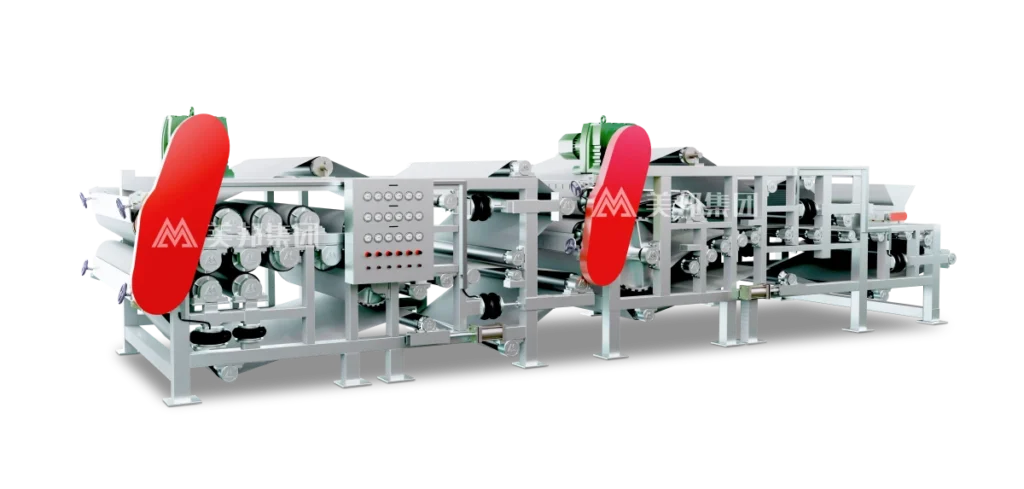
This is where ultra-large dual-motor belt filter presses offer a compelling solution.
Compared with conventional dewatering systems, modern large-format belt filter presses provide:
- Continuous 24-hour operation
- High throughput capacity
- Lower energy consumption per ton treated
- Reduced labor requirements
- Simplified maintenance
- Excellent water recovery performance
The dual-motor design provides stable belt tracking and balanced power transmission, helping maintain reliable performance under heavy-duty mining conditions.
For large kaolin washing plants pursuing dry stack tailings management, these advantages can significantly reduce total ownership costs over the life of the project.
Which Technology Is Better?
There is no universal answer.
A plate and frame filter press may be the preferred choice when:
- Extremely low moisture content is required
- Product recovery is the primary objective
- Throughput requirements are moderate
A belt filter press may be the preferred choice when:
- Tailings volumes are very large
- Continuous operation is desired
- Water recovery is a key goal
- Dry stacking is planned
- Operating costs must be minimized
Conclusion
Both belt filter presses and plate and frame filter presses have important roles in kaolin processing operations.
For high-value kaolin products that require the lowest possible moisture content, plate and frame filter presses remain a proven solution.
However, for large-volume kaolin washing tailings, where the priorities are dry stack tailings management, water recovery, continuous operation, and cost efficiency, ultra-large belt filter presses are becoming an increasingly attractive alternative.
As mining operations continue to expand and environmental requirements become more demanding, high-capacity dual-motor belt filter presses are well positioned to help kaolin producers achieve more efficient and sustainable tailings management.