Introduction: A New Challenge for West African Gold Mining
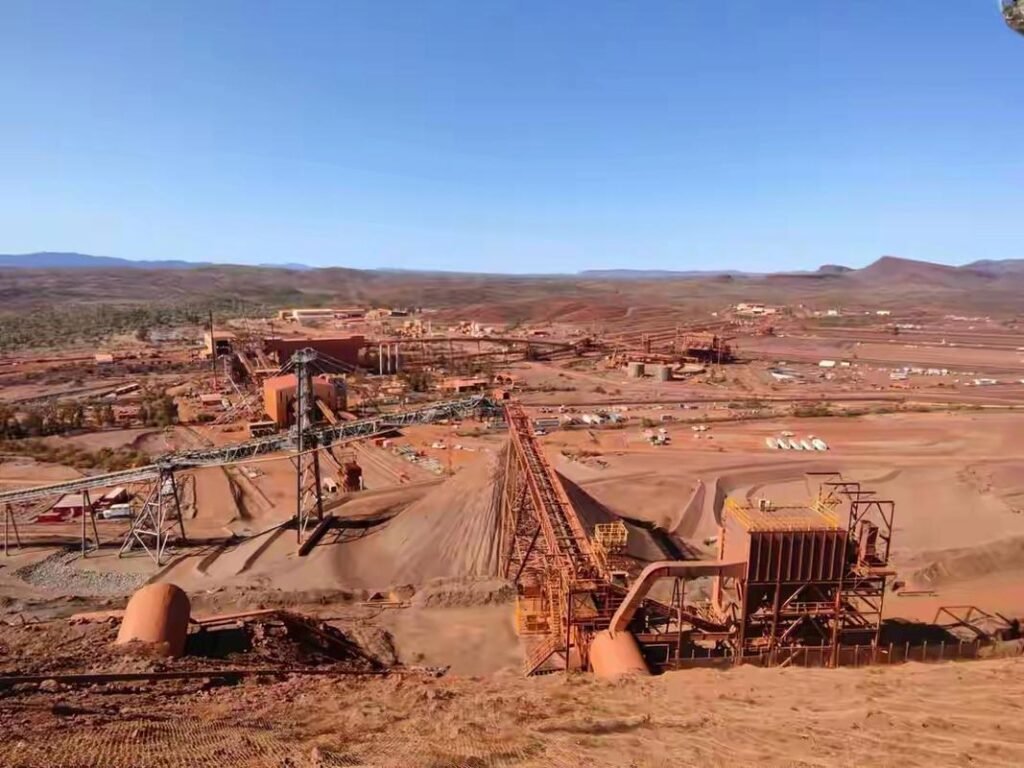
West Africa has become one of the world’s most important gold-producing regions. Countries including Ghana, Mali, Burkina Faso, Côte d’Ivoire, Guinea, and Senegal have attracted significant mining investment due to their rich gold resources. Along with the expansion of gold production, however, mining companies are facing increasing challenges in tailings management.
For many years, wet tailings storage facilities (TSFs) have been the standard solution for gold processing plants. Tailings slurry from the processing plant is transported to a storage facility where solids settle and water remains in the pond.
This approach is familiar and relatively simple. However, as mines expand production, traditional tailings storage creates several long-term challenges:
- Increasing TSF construction and expansion costs;
- Higher requirements for dam safety management;
- Water losses in tailings ponds;
- Greater environmental pressure during heavy rainfall seasons.
These challenges are particularly important in West Africa, where many mining operations experience seasonal rainfall, limited water infrastructure, and increasing expectations for responsible mining practices.
For medium-scale gold mines, the question is not simply whether tailings dewatering technology is needed. The more important question is:
Which tailings dewatering solution provides the best balance between investment cost, operational reliability, and environmental performance?
Understanding Tailings Challenges in Medium-Scale West African Gold Mines
Medium-scale gold mines typically process several thousand to tens of thousands of tonnes of ore per day. Compared with large multinational mining operations, these mines often have different investment priorities.
A large mining company may have the financial capacity to invest in highly sophisticated tailings systems. However, many medium-scale operations must carefully evaluate capital expenditure and long-term operating costs.
Gold tailings present additional technical challenges because they often contain:
- Fine mineral particles;
- Clay-rich materials;
- High moisture retention;
- Variable settling characteristics.
Unlike coarse mine waste, fine gold tailings can retain large amounts of water, making direct dry stacking difficult without proper treatment.
Therefore, an effective tailings management system usually requires one or more of the following steps:
- Thickening to remove excess water;
- Chemical conditioning with flocculants;
- Mechanical dewatering;
- Dry stacking and water recycling.
Moving Beyond Traditional Wet Tailings Storage
Traditional wet tailings storage remains widely used because of its simplicity.
The process is straightforward:
Mineral Processing Plant
          ↓
Tailings Slurry
          ↓
Tailings Storage Facility
The advantages are clear:
- Lower initial investment;
- Established operating experience;
- Suitable for mines with sufficient land availability.
However, the disadvantages become more obvious as production increases.
A growing tailings storage facility requires:
- Additional dam construction;
- More land occupation;
- Long-term monitoring;
- Water management systems.
In tropical regions of West Africa, heavy rainfall can increase the amount of water stored in tailings facilities, creating additional pressure on tailings dam management.
For mines planning long-term operation, reducing the volume of wet tailings entering storage has become an increasingly attractive option.
Tailings Thickening: The First Step Toward Better Water Management
One common approach is to introduce a thickening stage before final tailings disposal.
The purpose of thickening is not necessarily to create dry tailings, but to recover water and increase slurry density.
A typical process is:
Tailings Slurry
        ↓
Thickening System
        ↓
Higher Density Underflow
        ↓
Further Dewatering or Disposal
Thickening offers several advantages:
Improved Water Recovery
A large amount of process water can be recovered and returned to the processing plant.
This is valuable for mining operations where water availability changes significantly between dry and rainy seasons.
Reduced Downstream Load
Removing free water before mechanical dewatering improves overall system efficiency.
Lower Operating Costs
Less water needs to be pumped, transported, and stored.
However, thickening alone usually cannot produce dry stack tailings. The underflow still contains significant moisture and normally requires further treatment if the mine wants to achieve a stackable material.
Deep Cone Thickener and Filter Press: High Performance but Higher Investment
For mines requiring very high-density underflow and low moisture content, a common solution is:
Tailings
   ↓
Deep Cone Thickener
   ↓
Filter Press
   ↓
Dry Stack Tailings
This technology route provides excellent dewatering performance.
Deep cone thickeners can produce high-concentration underflow, reducing the amount of water sent to the filtration stage.
Filter presses, especially membrane filter presses, can further reduce moisture content and produce relatively dry filter cakes.
The advantages include:
- High water recovery;
- Low final moisture content;
- Stable dry stacking performance.
However, this approach also has limitations.
The disadvantages include:
Higher Capital Investment
Deep cone thickener systems require advanced engineering, heavy-duty drive mechanisms, and sophisticated control systems.
Filter presses also require significant investment when large processing capacity is needed.
Higher Technical Requirements
The performance of these systems depends on:
- Accurate flocculant control;
- Stable operation;
- Experienced maintenance personnel.
For some large mining operations, these costs are acceptable. However, for many medium-scale West African gold mines, the investment level may be difficult to justify.
A More Practical Route: Thickening Combined with Large-Capacity Belt Filter Press
For many medium-scale mines, the priority is not achieving the absolute lowest moisture content. Instead, the goal is finding a reliable system that can handle continuous production with reasonable investment.
This has increased interest in:
Thickening + Belt Filter Press systems.
A typical process is:
Gold Processing Plant
          ↓
Tailings Thickening Tank
          ↓
Flocculation System
          ↓
Large-Capacity Belt Filter Press
          ↓
Dry Stack Tailings
This approach combines water recovery and continuous mechanical dewatering.
Why Is This Suitable for Medium-Scale African Mines?
Continuous Operation
Unlike filter presses that operate in cycles, belt filter presses can process tailings continuously.
This is important for mines that operate 24 hours per day.
High Processing Capacity
Large belt filter presses with wide filter belts can handle significant volumes of tailings with fewer machines.
Lower System Complexity
Compared with high-pressure filtration systems, belt filter press systems are generally easier to operate and maintain.
Lower Initial Investment
By using a practical thickening system instead of a high-cost deep cone thickener, mines can reduce overall project investment.
For medium-scale gold mines in West Africa, where capital efficiency is often a key consideration, this balance can be highly attractive.
How Should Medium-Scale Gold Mines Choose the Right Dewatering Technology?
There is no universal solution for every mine.
The right technology depends on several factors.
Production Scale
Smaller mines may prioritize simple and low-cost systems.
Medium-scale mines with continuous production should consider systems capable of stable long-term operation.
Large mining operations may justify more advanced solutions.
Tailings Characteristics
Before selecting equipment, mines need to evaluate:
- Particle size;
- Clay content;
- Settling performance;
- Required final moisture content.
A solution that works well for coarse tailings may not perform equally well for fine gold tailings.
Total Cost of Ownership
Equipment price is only one part of the decision.
Mining companies should consider:
- Energy consumption;
- Maintenance requirements;
- Spare parts availability;
- Labor requirements;
- Long-term reliability.
A technically advanced system is not always the most economical choice if operating conditions are challenging.
Conclusion: Practical Solutions for the Future of West African Gold Mining
Tailings management is becoming a strategic issue for gold mines across West Africa. As production increases and environmental requirements become stricter, traditional wet tailings storage alone may no longer meet the long-term needs of many mining operations.
Advanced solutions such as deep cone thickener and filter press systems provide excellent dewatering performance, but their high investment and technical requirements may limit adoption among medium-scale mines.
For many medium-scale gold mining operations, a more balanced approach may be:
efficient thickening combined with continuous belt filter press dewatering.
This type of system provides:
- Improved water recovery;
- Reduced tailings storage pressure;
- Continuous operation;
- Lower investment requirements;
- Practical maintenance needs.
The future of tailings management in West Africa will not necessarily be defined by the most expensive technology, but by solutions that match local mining conditions, production scale, and economic realities.
For medium-scale gold mines, selecting the right balance between performance and cost will be the key to achieving safer, more sustainable, and more efficient tailings management.