
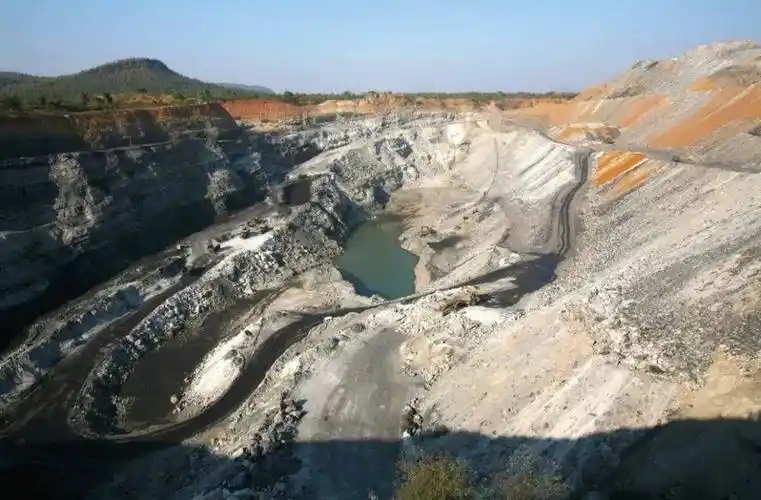
As environmental regulations become stricter and water resources grow increasingly valuable, iron ore producers are under pressure to improve tailings management practices. Traditional tailings storage facilities (TSFs) require large areas of land, consume significant volumes of water, and present long-term environmental and safety challenges.
For many mining companies, the focus has shifted from simply storing tailings to implementing efficient iron ore tailings dewatering systems that support dry stacking and maximize water recovery. Modern dewatering technologies not only reduce environmental risks but also lower operating costs and improve sustainability.
This article explains how iron ore tailings can be dewatered efficiently and why high-capacity belt filter presses are becoming an attractive solution for large-scale mining operations.
Why Iron Ore Tailings Dewatering Matters
Iron ore processing generates large quantities of fine tailings mixed with water. Depending on the beneficiation process, these tailings may contain fine particles that remain suspended for long periods, making natural settling inefficient.
Without effective dewatering, mines face several challenges:
- Large tailings storage requirements
- High water consumption
- Increased environmental liabilities
- Higher tailings management costs
- Reduced water recovery rates
As many mining regions face increasing water scarcity and stricter environmental standards, improving tailings dewatering has become a strategic priority.
The Growing Trend Toward Dry Stack Tailings
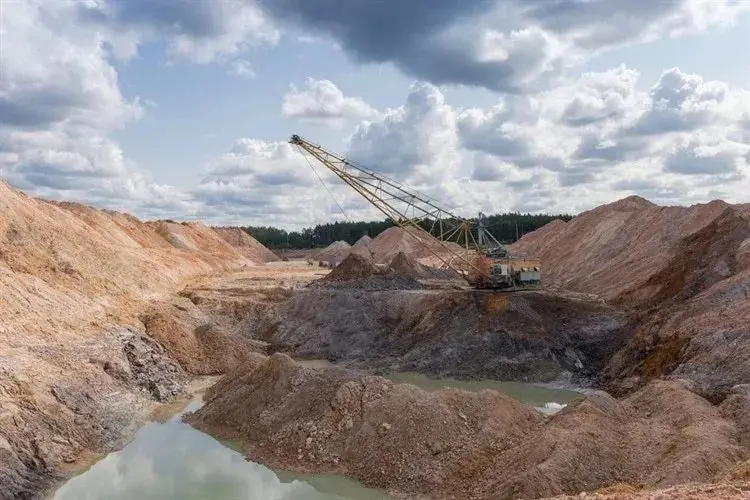
Traditional wet tailings disposal relies on large tailings ponds or storage facilities. While widely used, this approach can create long-term operational and environmental concerns.
Today, many mining companies are evaluating dry stack tailings systems as an alternative.
Dry stacking involves mechanically removing water from tailings before disposal. The dewatered material is then transported and stacked in a stable storage area rather than pumped into a conventional tailings pond.
The advantages include:
- Reduced water consumption
- Smaller storage footprint
- Improved environmental performance
- Enhanced tailings stability
- Easier reclamation and closure planning
For iron ore mines operating in water-sensitive regions, dry stacking can provide both environmental and economic benefits.
Understanding the Iron Ore Tailings Dewatering Process
An effective iron ore tailings dewatering system typically consists of several stages.
Tailings Thickening
The first step is usually a thickener, where flocculants are added to promote particle settling.
The thickener increases slurry concentration and reduces the volume that must be processed downstream.
Mechanical Dewatering
The thickened tailings are then transferred to mechanical dewatering equipment.
The goal is to:
- Remove additional water
- Produce a transportable filter cake
- Recover process water for reuse
This stage plays the most important role in determining overall dewatering efficiency.
Water Recovery and Recycling
Recovered water can be returned to the beneficiation plant and reused in grinding, classification, and washing operations.
This significantly reduces freshwater demand and improves overall water management.
Choosing the Right Dewatering Technology
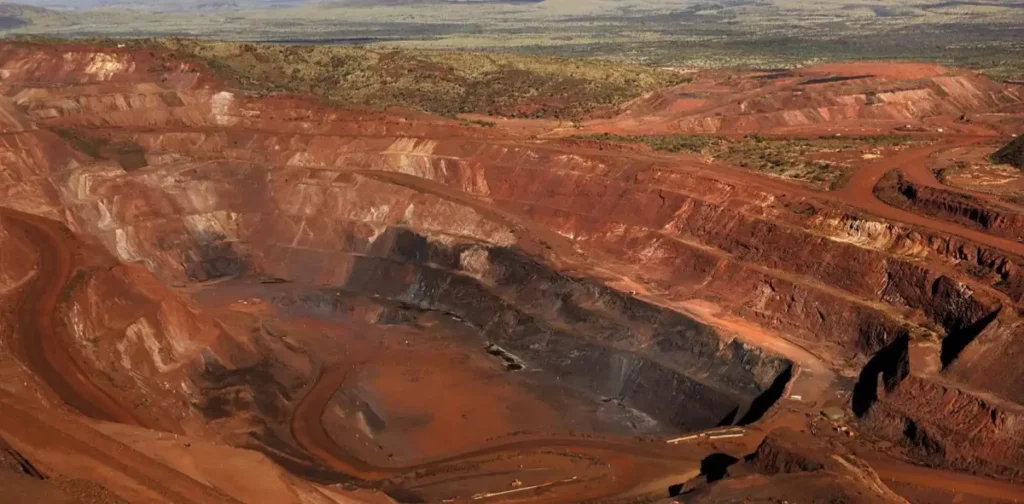
Several technologies are available for iron ore tailings dewatering.
Conventional Tailings Ponds
Advantages:
- Low initial equipment investment
Limitations:
- Large land requirements
- Water loss through evaporation
- Long-term environmental liabilities
Plate and Frame Filter Presses
Advantages:
- Lower final moisture content
Limitations:
- Batch operation
- Higher labor requirements
- More complex maintenance
- Capacity limitations for very large throughputs
Belt Filter Presses
Advantages:
- Continuous operation
- High throughput capacity
- Lower energy consumption
- Simplified maintenance
- Efficient water recovery
For large iron ore operations where massive volumes of tailings must be processed continuously, belt filter presses can provide significant operational advantages.
Why High-Capacity Belt Filter Presses Are Gaining Attention
Iron ore mines often generate thousands of tons of tailings every day.
As production capacity increases, the need for reliable large-scale dewatering equipment becomes more critical.
High-capacity belt filter presses for iron ore tailings offer several important benefits.
Continuous Processing
Unlike batch-operated systems, belt filter presses run continuously.
This allows mines to maintain stable production while avoiding bottlenecks in tailings handling.
Lower Operating Costs
Continuous operation typically results in:
- Reduced labor requirements
- Lower energy consumption
- Simplified maintenance procedures
These factors help reduce the total cost of tailings management.
Efficient Water Recovery
Large volumes of process water can be recovered and returned to the plant, reducing freshwater consumption and supporting sustainability objectives.
Reduced Tailings Storage Requirements
By removing water before disposal, mines can significantly reduce the volume of material requiring storage.
This helps extend the service life of existing tailings facilities and may reduce future capital expenditures.
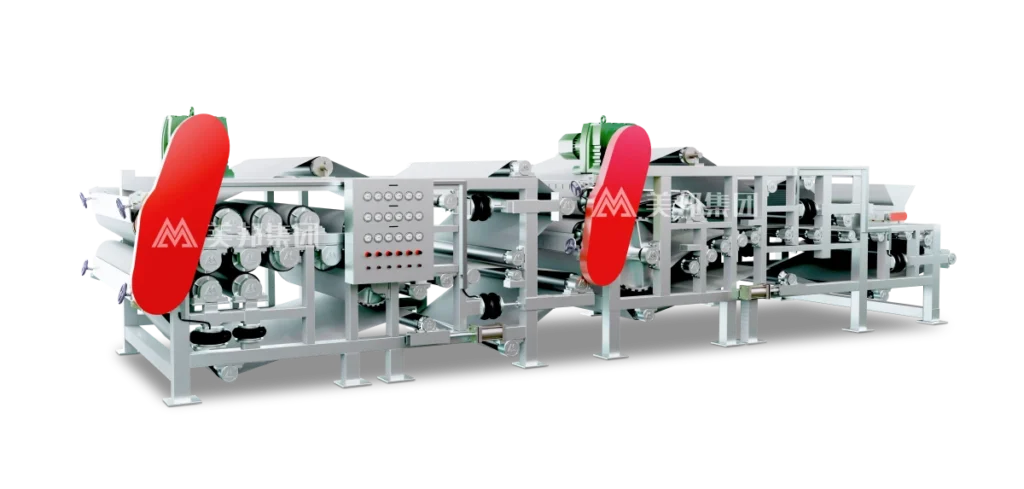
Meibang Ultra-Large Dual-Motor Belt Filter Press for Iron Ore Tailings
To address the growing demand for high-capacity tailings dewatering, Meibang has developed an ultra-large dual-motor belt filter press specifically designed for mining applications.
The system is suitable for:
- Iron ore tailings dewatering
- Copper tailings dewatering
- Nickel tailings treatment
- Kaolin washing tailings
- Sand washing tailings
- Other mineral processing tailings
Designed for Large-Scale Mining Operations
The machine features:
- Equipment length up to 18 meters
- Belt width up to 3.5 meters
- Slurry treatment capacity up to 80 m³/h
The large processing capacity enables operators to handle significant tailings volumes with fewer machines, reducing infrastructure and operating costs.
Advanced Dual-Motor Drive Technology
The dual-motor design offers:
- Stable power transmission
- Improved reliability
- Better performance under continuous heavy loads
- Reduced mechanical stress
These advantages are particularly important for demanding mining environments where uptime is critical.
Multi-Stage Dewatering Performance
The filtration system utilizes progressive pressure zones and optimized roller configurations to improve solid-liquid separation efficiency.
This helps produce drier filter cake while maximizing water recovery.
Energy-Efficient Operation
Compared with many alternative dewatering technologies, large belt filter presses can process substantial volumes of slurry while maintaining relatively low energy consumption.
For large mines operating around the clock, these savings can become significant over the life of the equipment.
Building an Efficient Tailings Water Recovery System
A modern dry stack tailings solution typically includes:
- Tailings thickener
- Polymer dosing system
- High-capacity belt filter press
- Water collection tank
- Process water recycling system
Together, these components create an integrated solution that improves water management and supports sustainable mining practices.
Conclusion
As mining companies seek safer, more sustainable alternatives to conventional tailings storage, iron ore tailings dewatering has become a critical part of modern mine operations.
By implementing effective dry stack tailings systems and maximizing water recovery, operators can reduce environmental risks, lower operating costs, and improve long-term sustainability.
For large iron ore mines handling substantial tailings volumes, Meibang’s ultra-large dual-motor belt filter press provides the continuous processing capacity, reliability, and water recovery performance needed to support efficient tailings management and modern dry stacking strategies.