
Mining has always played an essential role in modern society. Copper, iron ore, lithium, gold, nickel and other minerals provide the raw materials needed for infrastructure, energy, transportation and technological development.
But as the global mining industry expands, the way mineral resources are processed and how mining waste is managed are becoming increasingly important.
For mining companies, sustainability is no longer simply a corporate statement. It is becoming part of operational strategy.
Tailings management, water recovery, land utilization and environmental risk are now closely connected to the long-term performance of a mining project.
At Mebon, we believe that dewatering technology can play an important role in this transformation.
Our focus is simple: help mining companies remove more water from tailings, recover more process water, reduce the pressure on tailings storage facilities, and build more efficient tailings management systems.
Mining Is Entering a New Era of Tailings Management
As high-grade mineral resources become increasingly difficult to find, many mining companies are expanding existing operations or developing lower-grade deposits.
Higher production inevitably means higher tailings generation.
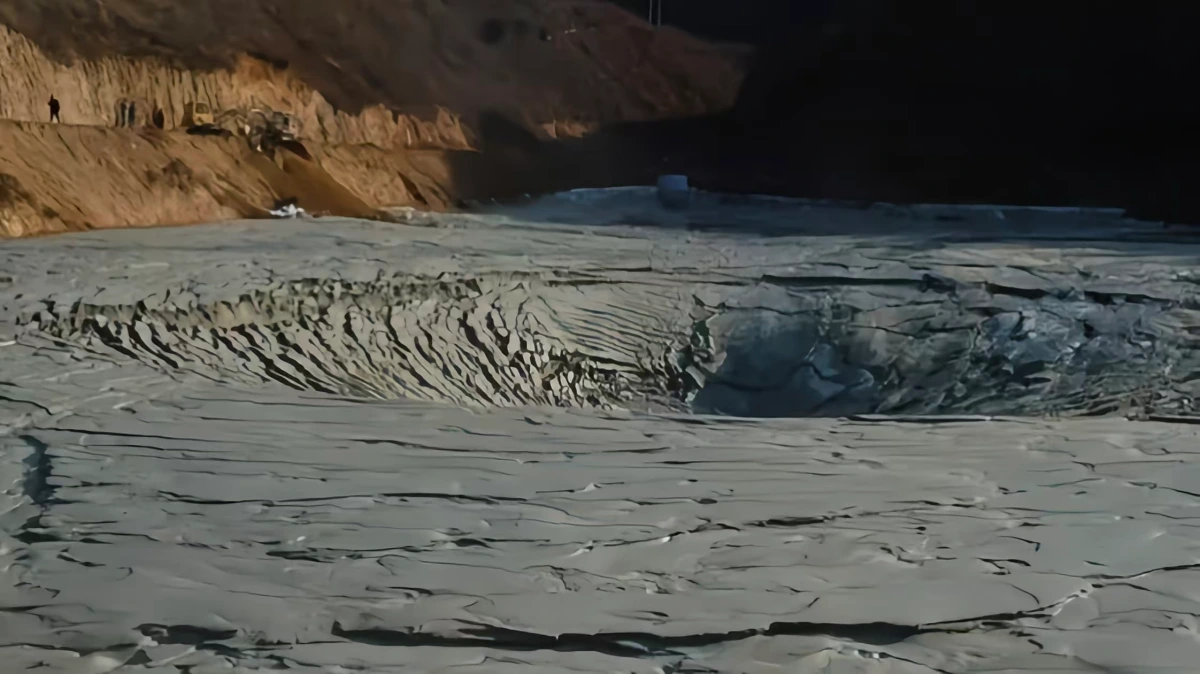
For a large mine, millions of tonnes of ore may be processed every year, generating enormous quantities of tailings. Traditionally, these tailings have often been transported as slurry to large tailings storage facilities.
This approach has served the industry for decades.
However, the challenges associated with conventional wet tailings management are becoming increasingly visible.
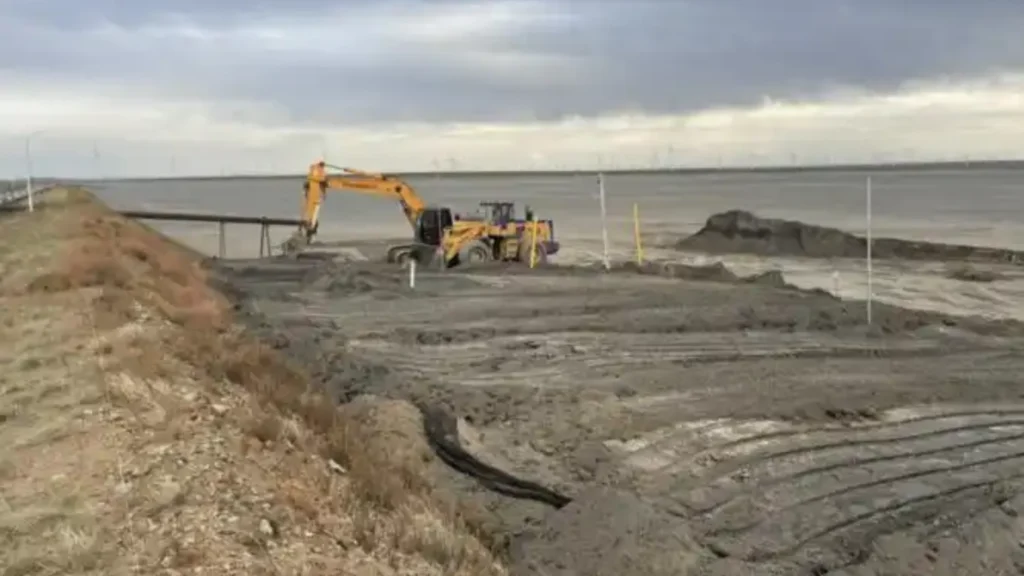
A large volume of water must be pumped, stored, monitored and eventually recovered. Tailings storage facilities require land, engineering investment, environmental monitoring and long-term management.
As production expands, existing TSFs may eventually approach their designed capacity.
Expanding them can involve significant capital expenditure, lengthy engineering and permitting processes, and additional environmental considerations.
This has led mining companies to reconsider a fundamental question:
Can more water be removed before tailings enter long-term storage?
We believe the answer is increasingly yes.
Water Is a Strategic Resource
Modern mineral processing depends heavily on water.
Water is used for grinding, classification, washing, flotation and other beneficiation processes. After processing, a significant proportion of this water remains associated with the tailings slurry.
If the water is transported together with the tailings to a storage facility, valuable process water is effectively removed from the production cycle.
Mechanical dewatering provides an opportunity to change this process.
By separating water from tailings before final disposal, mines can recover process water and potentially return it to the processing plant.
Recovered water can be reused in various stages of mineral processing, helping reduce freshwater demand and improving overall water-use efficiency.
This is particularly important in mining regions where water resources are limited or where competition for water is increasing.
For us, tailings dewatering is therefore not only about producing a drier filter cake.
It is also about recovering a valuable resource.
Reducing the Pressure on Tailings Storage Facilities
Tailings storage facilities are an important part of mining infrastructure, but their capacity is not unlimited.
When a mine increases production, the volume of tailings requiring storage also increases.
Mechanical dewatering can help address this challenge by removing a substantial amount of water before tailings are transported to their final storage location.
Dewatered tailings can be handled differently from conventional slurry.
Depending on the mineral characteristics, moisture requirements and site conditions, dewatered tailings may be suitable for engineered dry stacking or other controlled disposal strategies.
This can help reduce the amount of water entering a conventional tailings storage system and potentially extend the service life of existing storage capacity.
For mining companies, this creates a different approach to tailings management:
Instead of continually increasing storage capacity, reduce the volume of water that needs to be stored in the first place.
This principle is becoming increasingly relevant for copper, iron ore, gold, lithium and other mineral processing operations.
From Tailings Disposal to Resource Recovery
Sustainable mining does not mean eliminating waste overnight.
It means continuously improving the way resources, energy, water and land are used throughout the mining process.
Tailings contain valuable minerals, but they also contain a large quantity of water.
A modern tailings dewatering system treats this water as a recoverable resource rather than simply an unavoidable component of waste.
This shift in thinking is important.
The objective of dewatering is no longer limited to achieving a certain filter cake moisture content. A well-designed system should also consider water recovery, energy consumption, equipment reliability, labor requirements, storage conditions and the overall economics of the mining operation.
This is why we approach tailings dewatering as a system rather than simply as a machine.

Engineering for Different Mining Conditions
There is no universal tailings dewatering solution.
Iron ore tailings, copper tailings, gold tailings and lithium processing residues can behave very differently during filtration.
Particle size distribution, mineralogy, slurry concentration, flocculation conditions, feed pressure and target moisture all influence dewatering performance.
The appropriate equipment must therefore be selected according to the actual characteristics of the tailings and the requirements of the project.
At Mebon, our approach is to begin with the process rather than the equipment model.
We consider:
- Mineral type and tailings characteristics
- Daily and hourly production capacity
- Existing thickening and pumping systems
- Required water recovery
- Target filter cake moisture
- Available installation area
- Power and infrastructure conditions
- Dry stacking or other final disposal requirements
The objective is to develop a practical dewatering system that works within the mine’s existing process rather than forcing the operation to adapt to a standard machine.
High-Capacity Dewatering for Large-Scale Mining
Large mines require large-scale solutions.
A modern mineral processing plant can generate thousands or even tens of thousands of tonnes of tailings every day. A dewatering system with insufficient capacity can quickly become a bottleneck in the entire operation.
This is why Mebon has focused on the development of ultra-large belt filter presses for mining applications.
Our mining-oriented systems can be configured with belt widths of up to 3.5 meters, equipment lengths of up to 18 meters and processing capacities of up to 80 tonnes per hour under suitable operating conditions. Actual performance depends on the mineral characteristics and process conditions.
The objective is not simply to build a larger machine.
It is to provide a continuous mechanical dewatering solution capable of handling the scale of modern mining operations.
Continuous operation, high throughput and automated material handling can help reduce the number of machines required for a given production capacity while simplifying overall operation.
Supporting Dry Stack Tailings
Dry stacking is becoming an increasingly important option for mines seeking alternatives to conventional wet tailings storage.
The technology does not eliminate every tailings management challenge, and its feasibility depends on geology, climate, tailings characteristics, site conditions and project economics.
But where conditions are suitable, effective mechanical dewatering is one of the key components of a dry stack tailings system.
The basic concept is straightforward:
Thicken the slurry → mechanically dewater the tailings → recover process water → transport and stack the dewatered cake.
The dewatering stage determines how much water can be removed before the tailings reach the storage area.
For this reason, filtration performance is directly connected to the overall performance and economics of the dry stacking system.
Sustainability Through Practical Engineering
We believe that sustainability should be measurable.
It should be reflected in lower water consumption, better resource utilization, reduced tailings storage requirements, improved operational efficiency and more responsible use of land.
At the same time, sustainability cannot be separated from economics.
A technology that is environmentally attractive but economically impractical will be difficult to implement at a large mine.
That is why our engineering philosophy is based on finding the balance between environmental performance and operating economics.
A successful tailings dewatering project should make sense from both perspectives.
It should help the mine achieve its environmental objectives while delivering a reasonable return on investment.
Our Role as a Dewatering Technology Partner
Mebon is not a mining company, and we do not operate mines.
Our responsibility is different.
We provide the dewatering technology that helps mining companies improve the way they manage water and tailings.
Our mining dewatering solutions are designed for applications including copper tailings, iron ore tailings, gold tailings, lithium processing residues and other mineral processing materials. Our website currently presents projects and application scenarios in major mining regions including South America, Africa, Australia and Asia.
We work with mining companies, EPC contractors, engineering firms and project partners to develop equipment configurations based on actual process requirements.
From equipment selection and process design to installation guidance and commissioning support, our objective is to make large-scale dewatering projects more practical and reliable.
Looking Toward a More Responsible Mining Industry
The future of mining will not be defined only by how much ore can be extracted.
It will increasingly be defined by how efficiently resources are used, how responsibly tailings are managed, how much water can be recovered, and how effectively environmental risks are controlled.
The transition will not happen through one piece of equipment or one technology.
It will require better engineering, better process design and continuous innovation across the mining value chain.
We believe high-capacity mechanical dewatering has an important role to play in that transition.
By recovering process water, reducing the water content of tailings and supporting more efficient storage strategies, dewatering technology can help mining companies move toward a more resource-efficient model.
Our commitment is to keep developing the technology that makes this transition more practical.
From copper mines in South America to mining operations in Africa, Australia and Asia, Mebon aims to work with mining companies around the world to build more efficient, more responsible and more sustainable tailings management systems.
Better dewatering. Better water recovery. More responsible mining.